
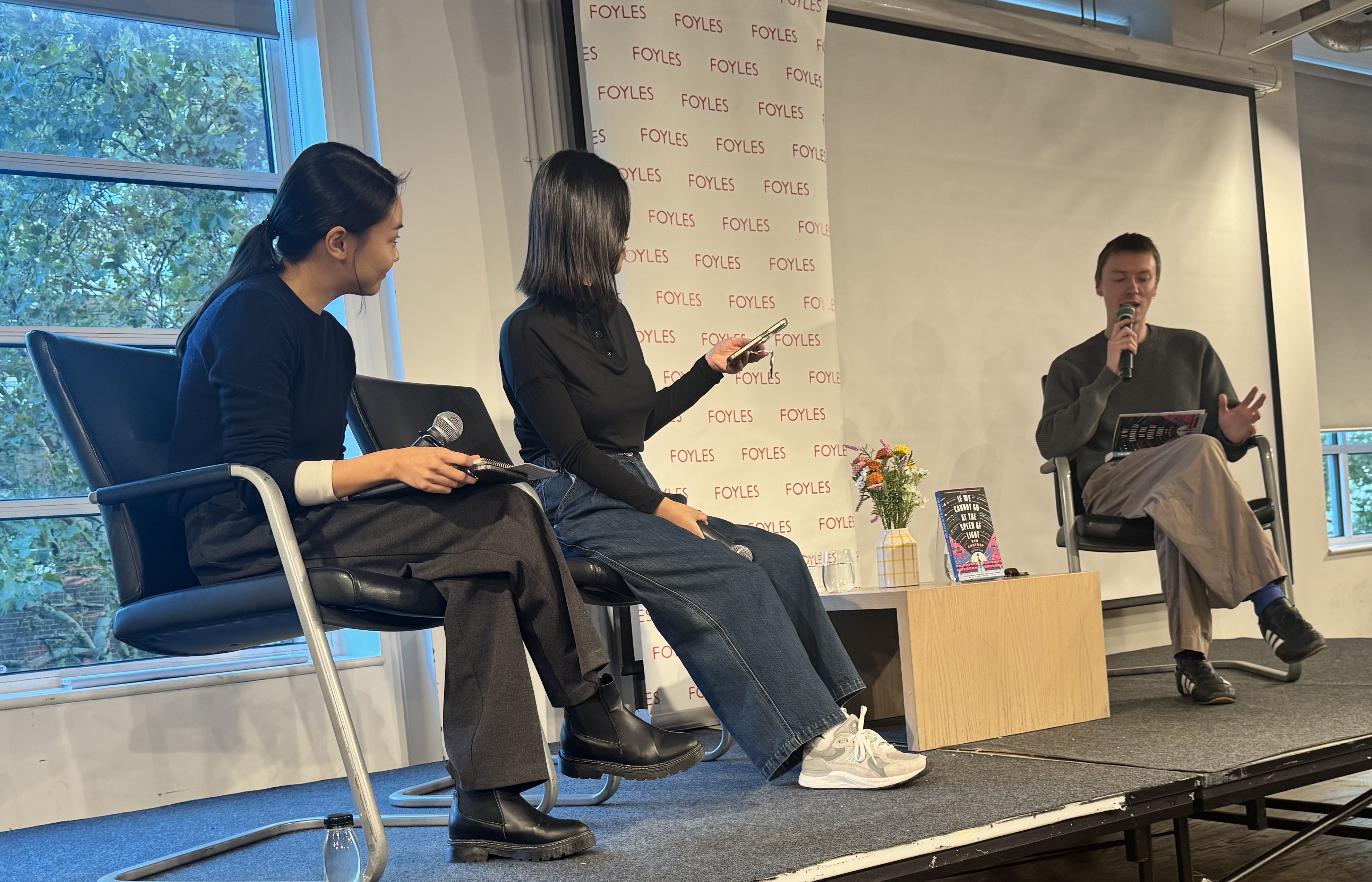
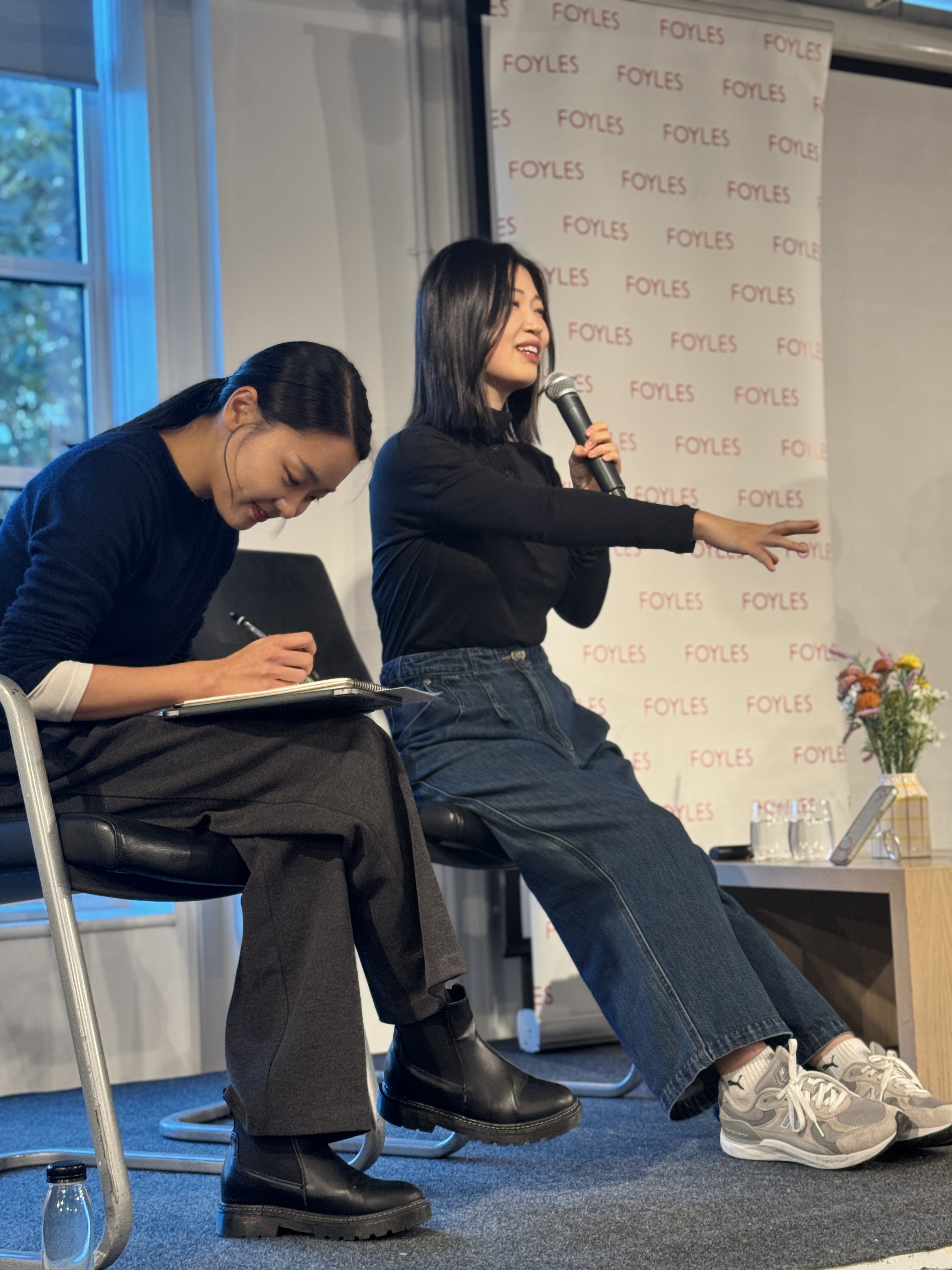
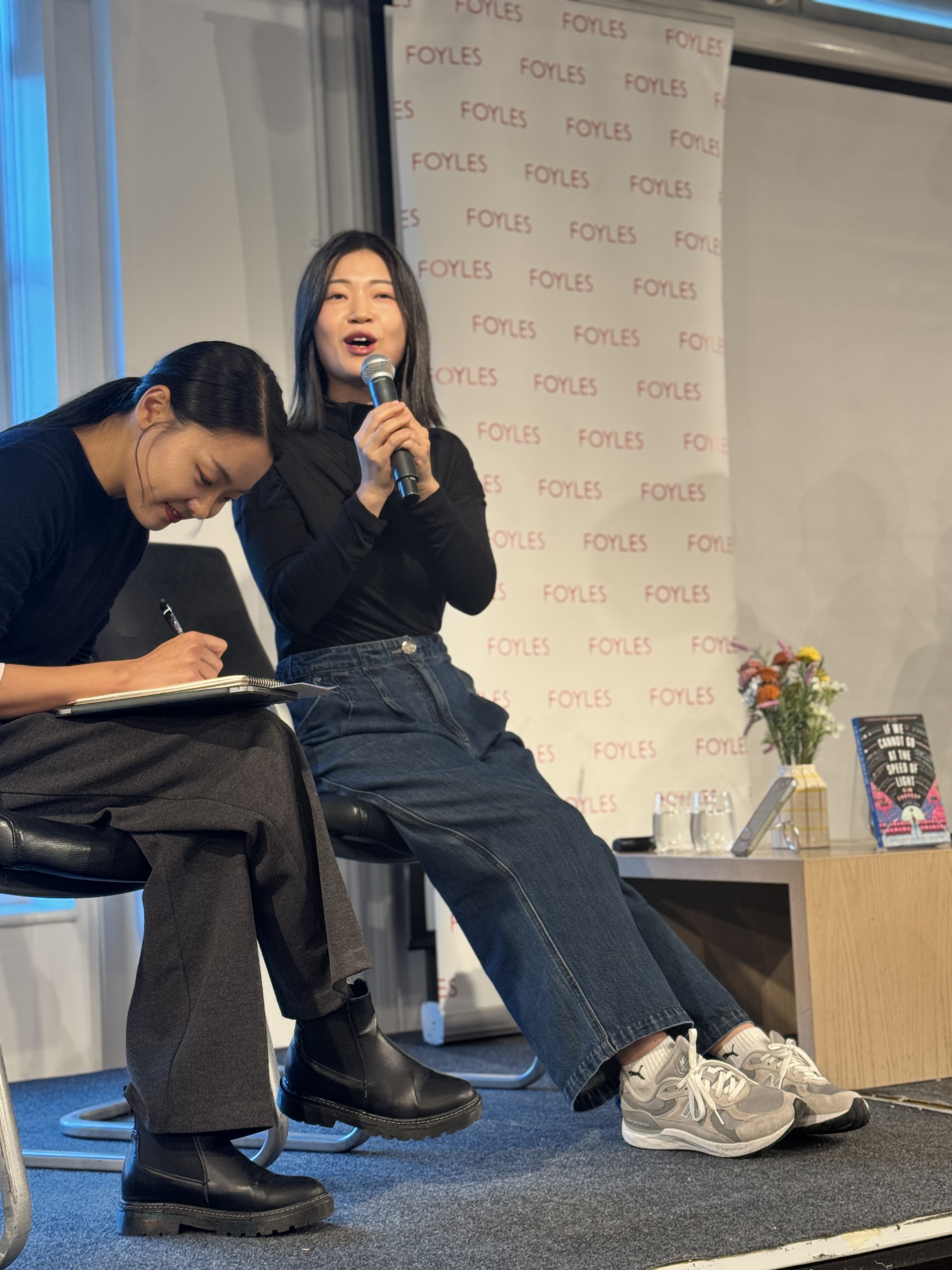
On Saturday evening, South Korean author Kim Choyeop was greeted by a packed auditorium at Foyles on Charing Cross Road. It was her first book talk in English, and she admitted to feeling a little nervous. She seemed genuinely surprised by the turnout, joking that she had not expected anyone to come, before warmly thanking the audience for being there.
There was a large Korean contingent in the audience, which became apparent whenever Kim spoke in Korean before her words were translated into English by an interpreter. There were frequent bursts of laughter, and I found myself waiting patiently to discover whether the joke would be just as funny in English.
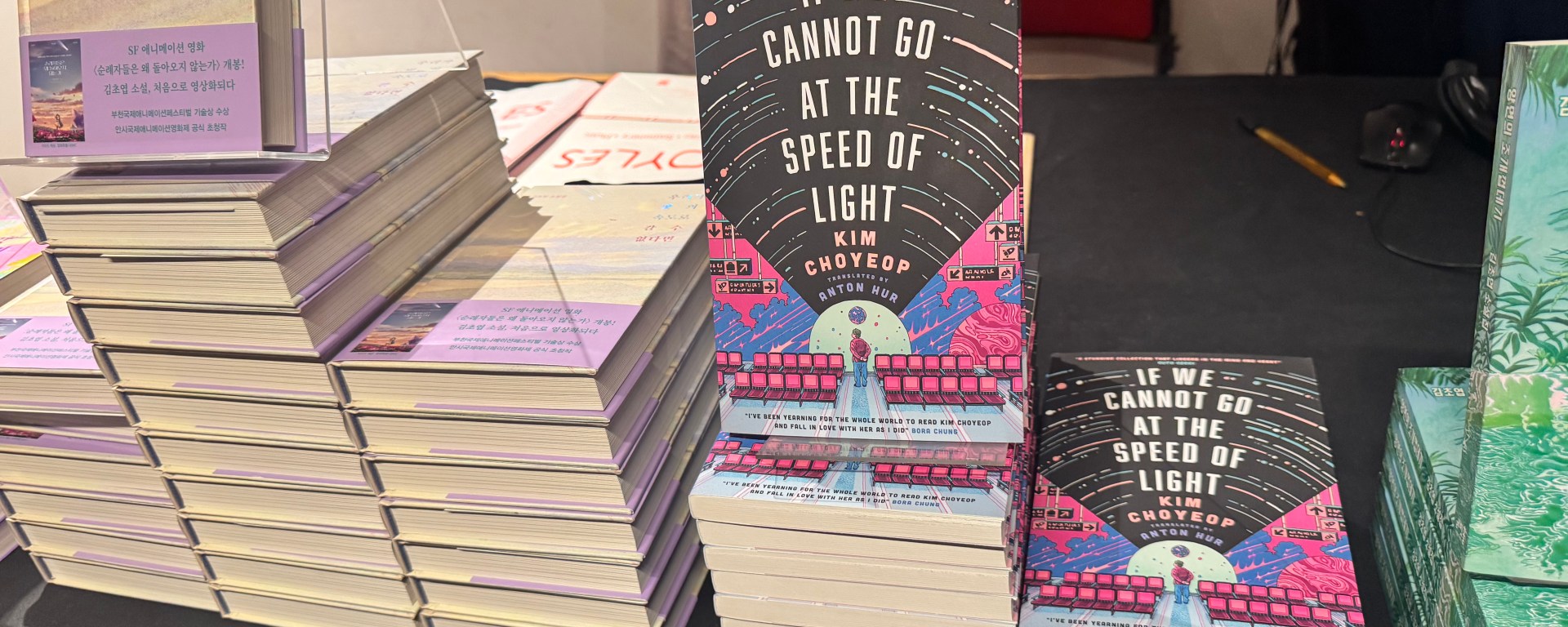
Cultural writer and critic Barry Pierce led the conversation about Kim and her acclaimed debut short story collection, If We Cannot Go at the Speed of Light, which has sold more than 400,000 copies in South Korea.
Kim has published several works in Korean, including novels, short story collections and shorter fiction. Her latest novel, Olive Under the Sun (태양 아래 올리브), was published in August 2026.
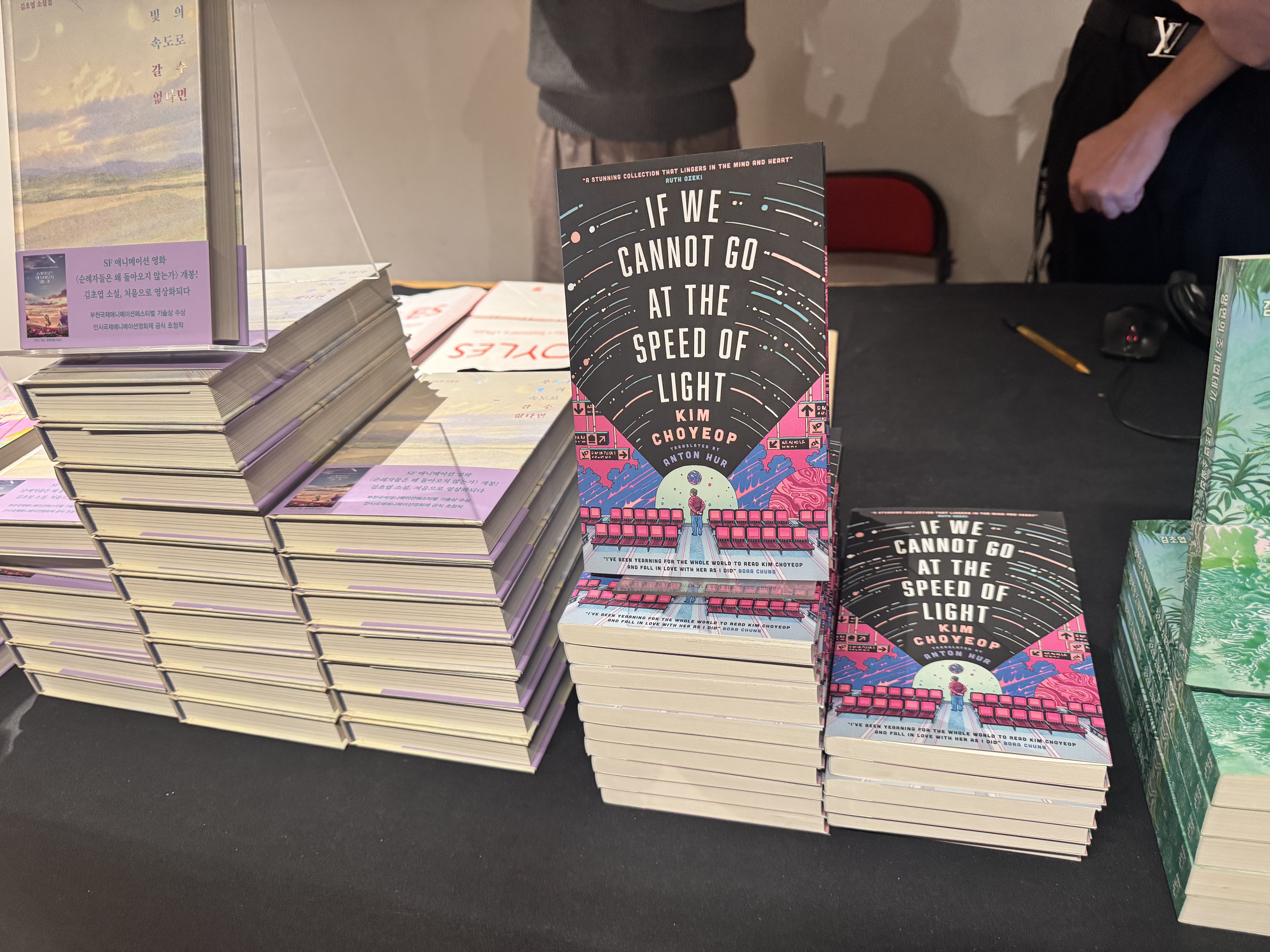
If We Cannot Go at the Speed of Light is Kim’s first work to be translated into English, by the brilliant translator Anton Hur. Hur was introduced to the book by fellow South Korean writer Bora Chung, whose work he had previously translated.
Although I had yet to read the collection, I had heard great things about it from friends who had. Bringing together stories of speculative fiction, the book explores questions of identity, love, life and death through imagined worlds and possibilities.
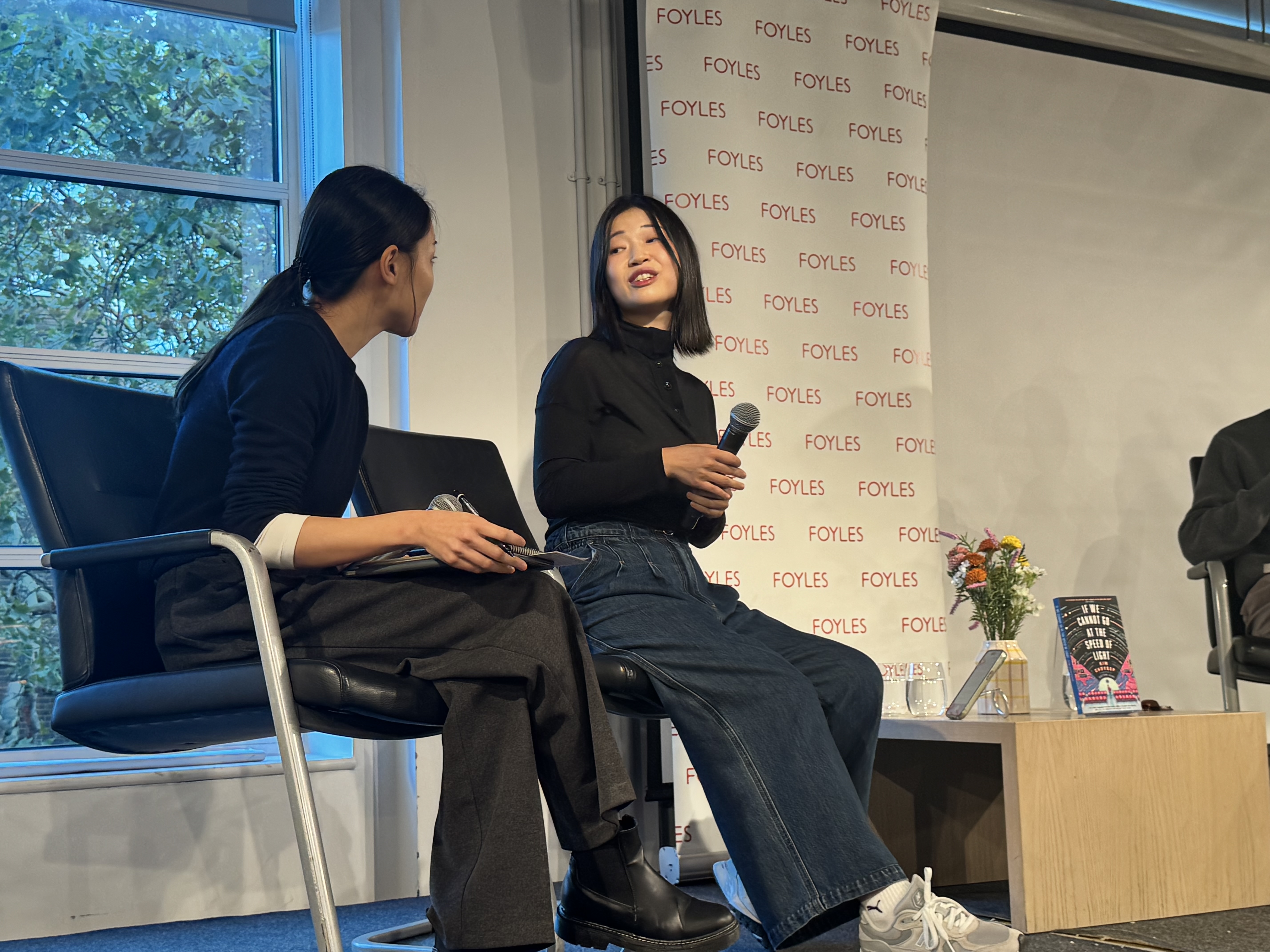
Hailing from Ulsan, a major coastal city in South Korea, Kim studied chemistry before pursuing a master’s degree in biochemistry at Pohang University of Science and Technology (POSTECH). Yet alongside her scientific interests, she had always been drawn to storytelling.
Creativity was very much part of her upbringing. Her mother was a poet and her father a musician, both of whom influenced her interest in the arts. Rather humorously, despite her love of writing, her father encouraged her not to pursue it as a career.
According to an earlier interview, Kim gave herself a year to pursue writing after completing her studies, knowing that a full-time job would make it difficult to devote herself to it. Living on her savings and taking on writing opportunities, she wrote the stories that would become If We Cannot Go at the Speed of Light in 2018. The collection was published in 2019.
Reflecting on her childhood, Kim spoke about finding human emotions difficult to understand. Reading people’s facial expressions and recognising unspoken social expectations did not come naturally to her. She referred to the Korean concept of nunchi (눈치), the ability to read the room, recognise subtle social cues and understand what others might be thinking or feeling without being explicitly told.
Instead, she found comfort in the periodic table. Unlike the complexities of human behaviour, the elements were orderly, with established patterns and rules that made sense to her.
What particularly interested me was how Kim’s curiosity about human relationships seemed to intersect with her fascination with science. She recalled discovering a poem she had written when she was younger, drawing connections between sticky notes, molecules and human relationships.
That interest in understanding people also influenced her decision to pursue biochemistry. She wanted to understand what human beings were made of and how the chemical substances within our bodies might influence our emotions.
Writing has helped her better understand people. While some writers might begin by understanding a person before developing a fictional character, Kim found herself working in reverse. Through creating characters and exploring their personalities, she gradually began to understand human beings in greater depth.
Although Kim chose to study science, she continued to be interested in writing. She spoke about the similarities between science and literature, particularly how both allow us to explore new ideas and challenge conventional ways of thinking.
She illustrated this through an example involving plants, drawing on her first novel, Greenhouse at the End of the Earth.
At first glance, plants might appear static and passive, particularly when compared with humans and animals. But look a little closer and an entirely different world emerges. Plants are active, assertive and, in their own ways, remarkably demanding.As someone who shares her home with a rather temperamental Ficus benjamina, I found myself nodding vigorously in agreement. Move it from its favourite spot and it promptly sheds a few leaves to register its displeasure.
When she was asked why her stories so often feature people who have been left behind by technology or time, she did not point to any single experience. Instead, she drew on different aspects of her upbringing and the society around her.
The feminist movement in South Korea had encouraged her to think about issues affecting vulnerable people, while her own experience of hearing loss had led her to question how disability is defined and understood.
Her family background offered another perspective. With a poet for a mother and a musician for a father, she was familiar with the financial difficulties artists could face. Coming from Ulsan, she was also conscious of the inequalities between Seoul and South Korea’s regional cities. These experiences all contributed to her interest in characters whose lives and experiences might otherwise be overlooked.
The portrayal of women in literature was another subject close to her interests. As a young reader, Kim noticed that men were often the adventurous protagonists, while women were largely confined to the role of heroines. She found this strange and wanted to change that pattern in her own writing.
She wanted to create female protagonists with different personalities, experiences and relationships. These relationships are not always easily defined. Some might be interpreted as friendships, others as romantic relationships, leaving room for different readings of the connections between her female characters.
The conversation also explored cultural representation in science fiction. Kim observed that the genre has traditionally been Western-centric, with stories often centred on the United States or Europe.
She used My Space Hero, the seventh story in If We Cannot Go at the Speed of Light, as an example, explaining that she deliberately chose geographical settings in Asia and Southeast Asia. This allowed her to explore the complexities of communication between characters who speak different languages.
Kim pointed out that in Western science fiction, the assumption that aliens might speak English is often accepted without much explanation. But if an alien were to arrive in South Korea speaking Korean, a writer would need to consider why. She also raised questions about who would represent humanity if aliens arrived in Korea rather than somewhere such as London.
Her observation reminded me of a point made by comedian Trevor Noah in his stand-up comedy. He jokes about how aliens invading Earth always seem to head straight for the United States and London, while Africa barely gets a mention.
While Noah makes the observation through comedy, Kim’s point was about how changing the setting of a science-fiction story can also change the assumptions we make about language, communication and power.
Another audience member was curious about the warmth and affection in Kim’s stories, particularly when they deal with marginalised characters and difficult circumstances.
Kim’s response was that an individual might not be able to change the entire universe, but there is still the possibility of making a small crack in it. She did not want her stories to end in darkness, preferring to leave some room for hope.
I left the conversation feeling inspired, with a signed copy of If We Cannot Go at the Speed of Light in hand and a renewed curiosity about Kim’s imaginative worlds. Having heard so much about her work from fellow readers, I am now looking forward to finding the time to discover for myself what has captivated so many of them.
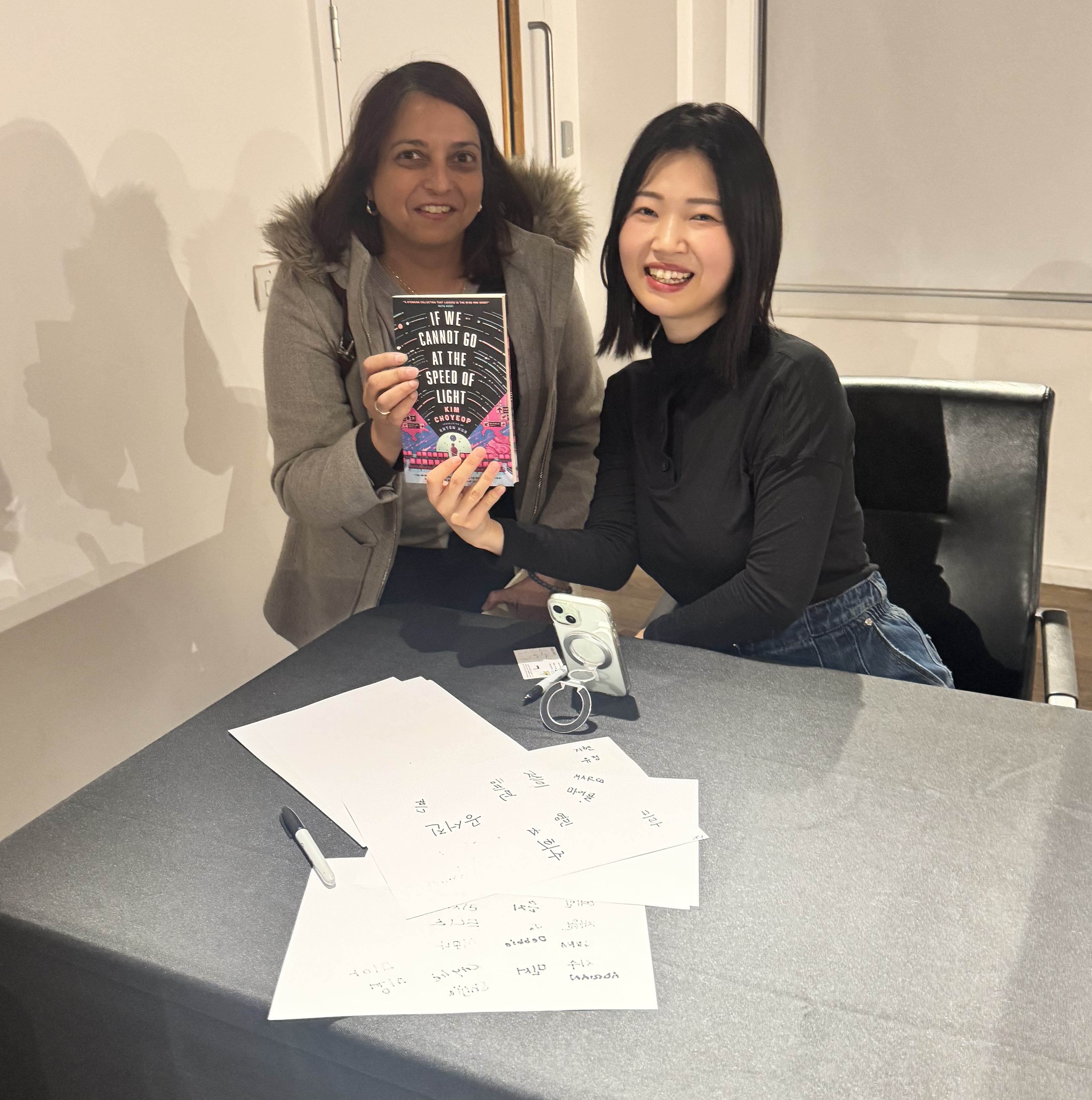
With special thanks to Foyles Charing Cross Road and Carmelo and the KCCUK (Korean Cultural Centre UK)for making this wonderful literary evening possible.

