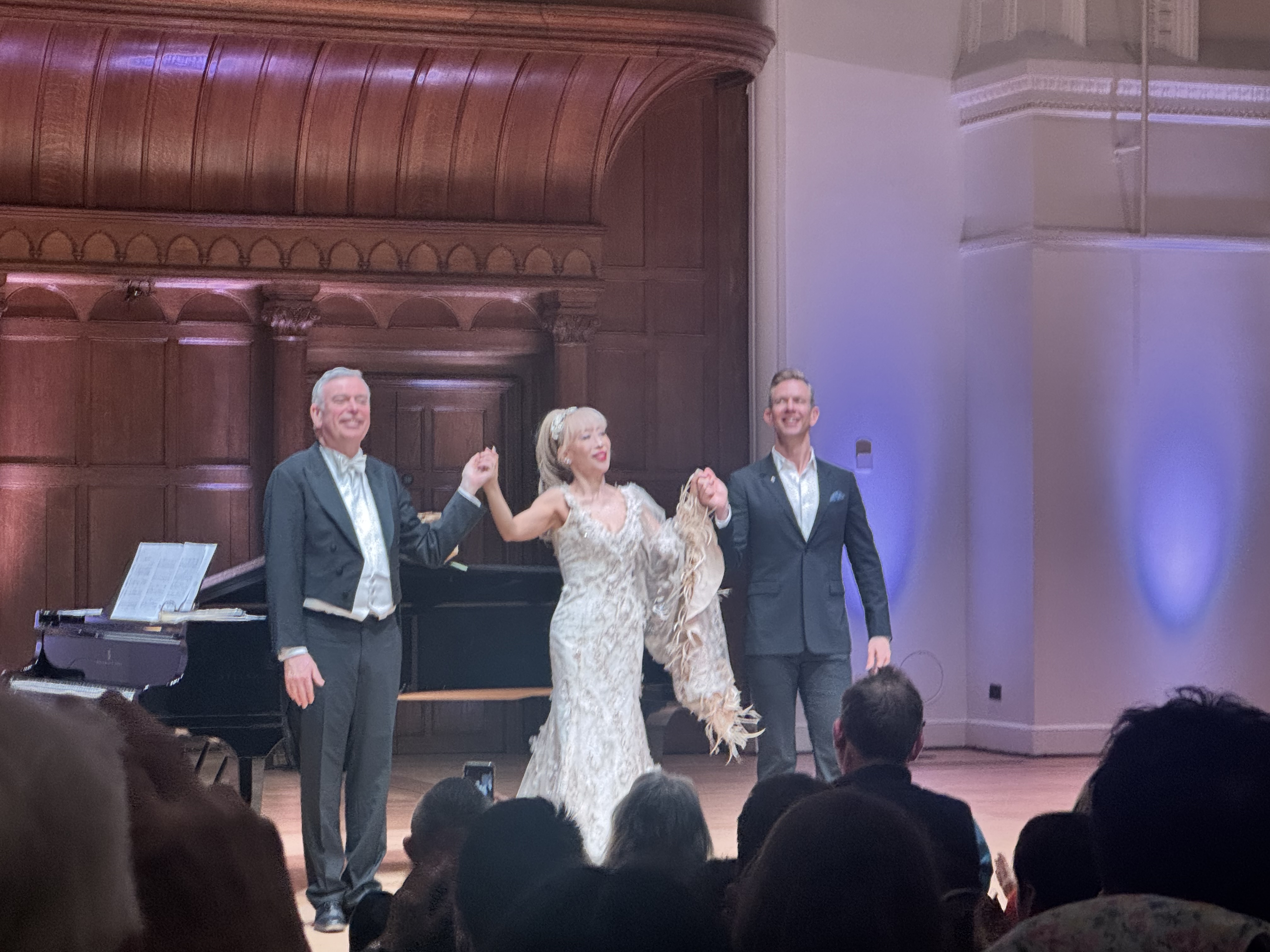

On the 12 March 2026 – Sumi Jo performed a concert together with Edward Nelson (baritone) and Malcolm Martineau (pianist)
The first time I saw Sumi Jo perform was at the Korean Cultural Centre in 2014. It was part of a celebration marking Korea’s selection as Market Focus for the London Book Fair. KCCUK had flown 12 Korean authors to London for a series of events, one of whom was Han Kang.
Twelve years later, I had the chance to see Sumi Jo again at Cadogan Hall, in March, in a concert celebrating her forty-year career, titled Mad for Love: 40th Anniversary Celebration Concert. The 950-seat venue, set in the heart of Chelsea, offered an intimate setting for a concert that moved between grandeur and warmth. Its reputation as one of London’s leading concert venues gave the evening a fitting sense of prestige and intimacy.
The concert marked 40 years since Jo’s professional debut in Italy in 1986, when she appeared as Gilda in Verdi’s Rigoletto at the Teatro Comunale Giuseppe Verdi in Trieste. The world-renowned soprano rose to international prominence in the late 1980s and early 1990s, with her breakthrough coming when she was cast as the Queen of the Night in The Magic Flute, one of the most technically demanding roles in the soprano repertoire. She soon began performing at major opera houses, including La Scala and the Metropolitan Opera. In 1993, she won a Grammy Award, cementing her status as an international artist. The evening itself felt like an expansive journey through the many worlds Jo has moved through: opera, operetta, art song, folk-inspired repertoire and musical theatre.
The programme gave us a varied musical and linguistic repertoire, including Italian, French, German, English and Korean, showing both dramatic virtuosity and warmth. Jo is known for her bel canto and coloratura singing: music that requires precision, flexibility, speed and high notes. There were moments where the voice sounded less steady, but these did not overshadow the warmth, charisma and emotional generosity of the performance.
As well as celebrating her long career in music, Jo shared the stage with pianist Malcolm Martineau and baritone Edward Nelson. Martineau has been a constant companion for Jo on the piano for her UK appearances, while Nelson and Jo met at the Glyndebourne Opera Cup in 2020, where he was the prestigious winner and she was a judge on the panel.
I was especially excited to hear her rendition of “Casta Diva” from Bellini’s Norma. The aria has a still, prayer-like quality, but beneath its calm surface sits enormous emotional tension. Jo’s performance captured that contrast: controlled, elegant and quietly intense.
Jo and Nelson performed two duets together: “Pronta io son” from Donizetti’s Don Pasquale and “Lippen schweigen” from Lehár’s The Merry Widow. “Pronta io son” brought out a particularly playful stage chemistry, with both singers leaning into the duet’s comic, scheming energy.
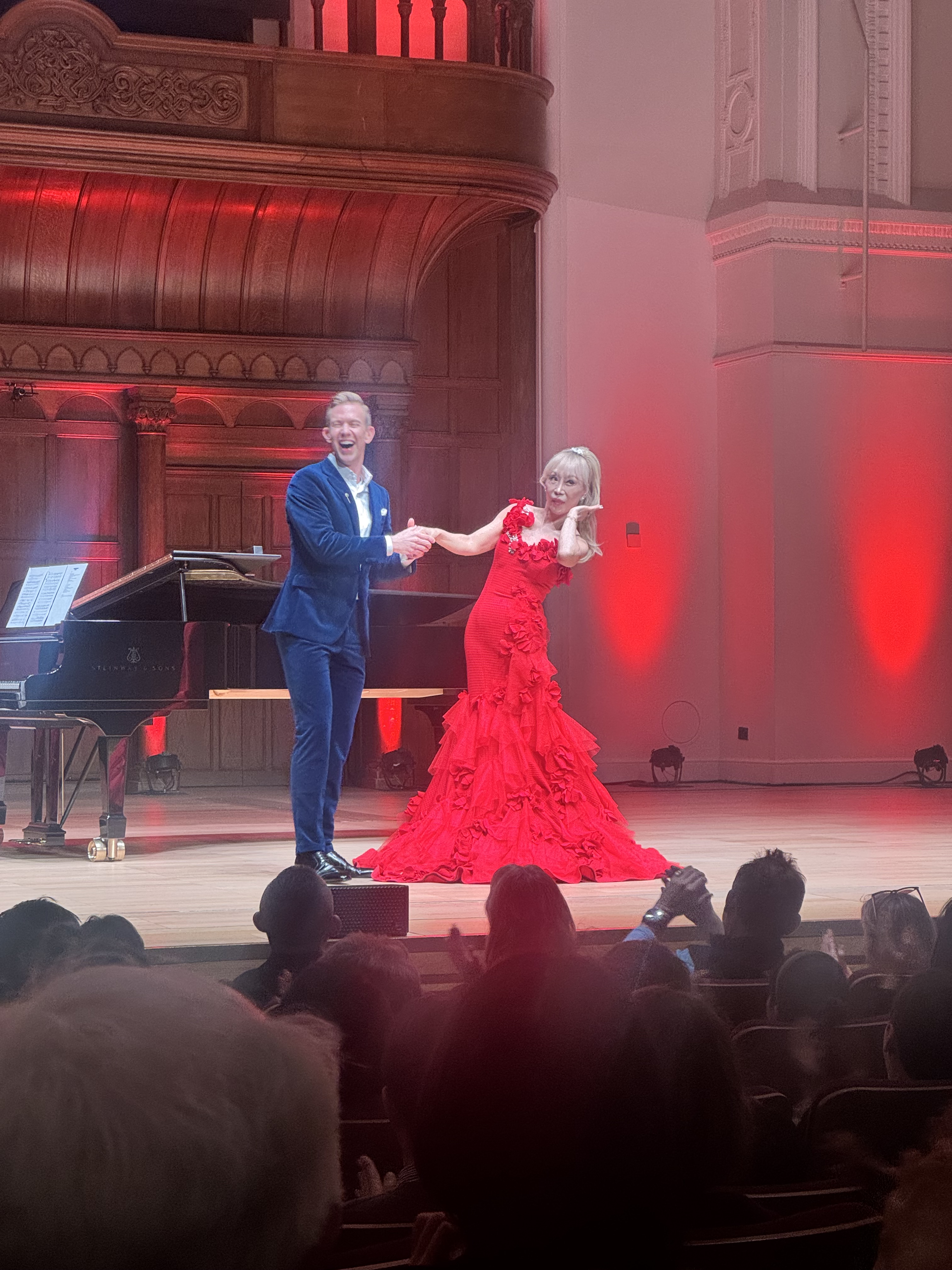
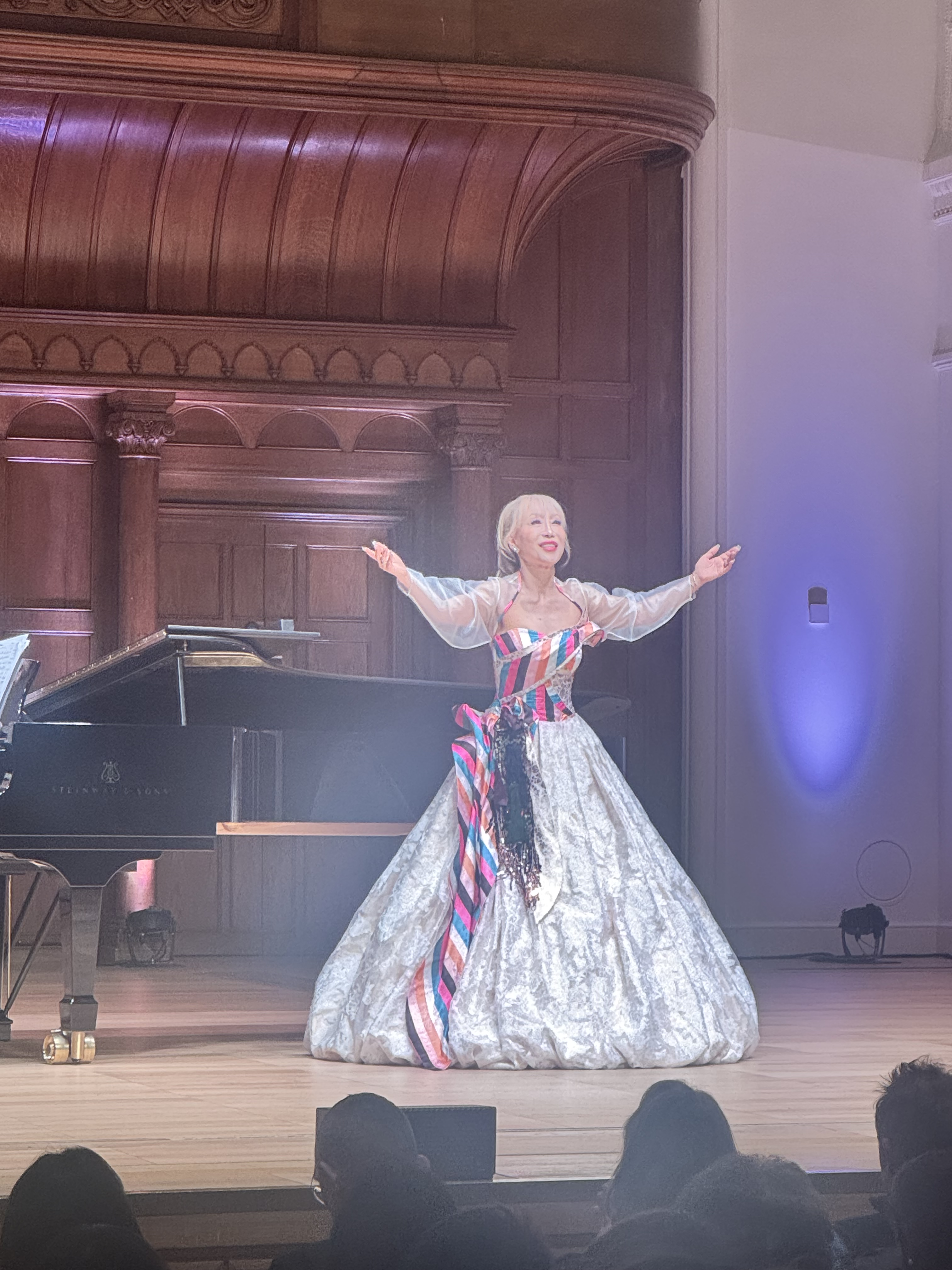
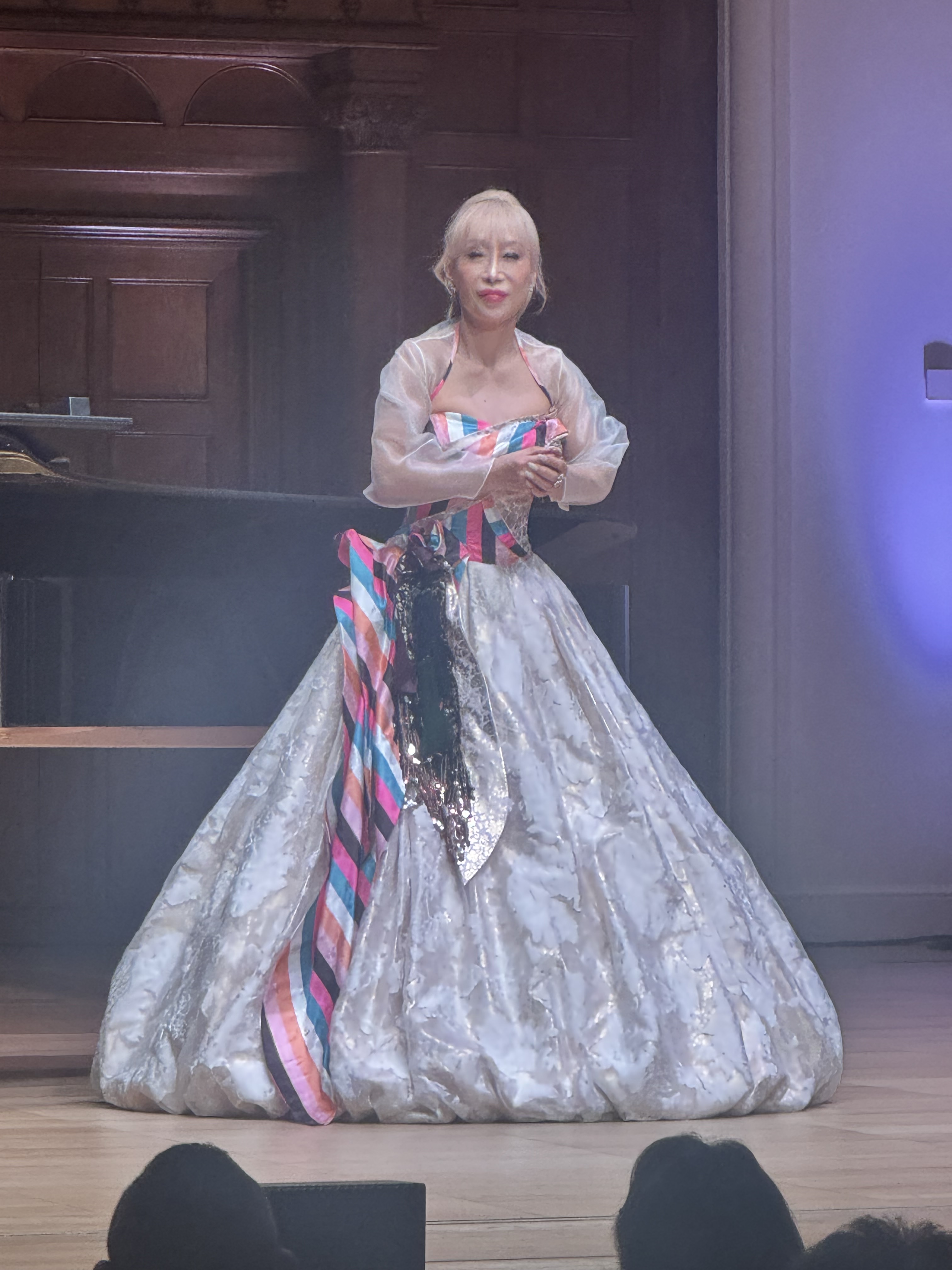
Throughout the concert, which lasted over two hours, Jo changed into three beautiful gowns. The second incorporated the Korean colours, a subtle reminder of her roots amid a programme celebrating her international career. Toward the end, prior to the encores, she spoke, thanking the audience for being with her, and made a joke that, as it was past 10pm, she could no longer make her dinner reservation. She spoke about wanting to offer music as a gift, and about its power to heal amid all the sadness in the world.
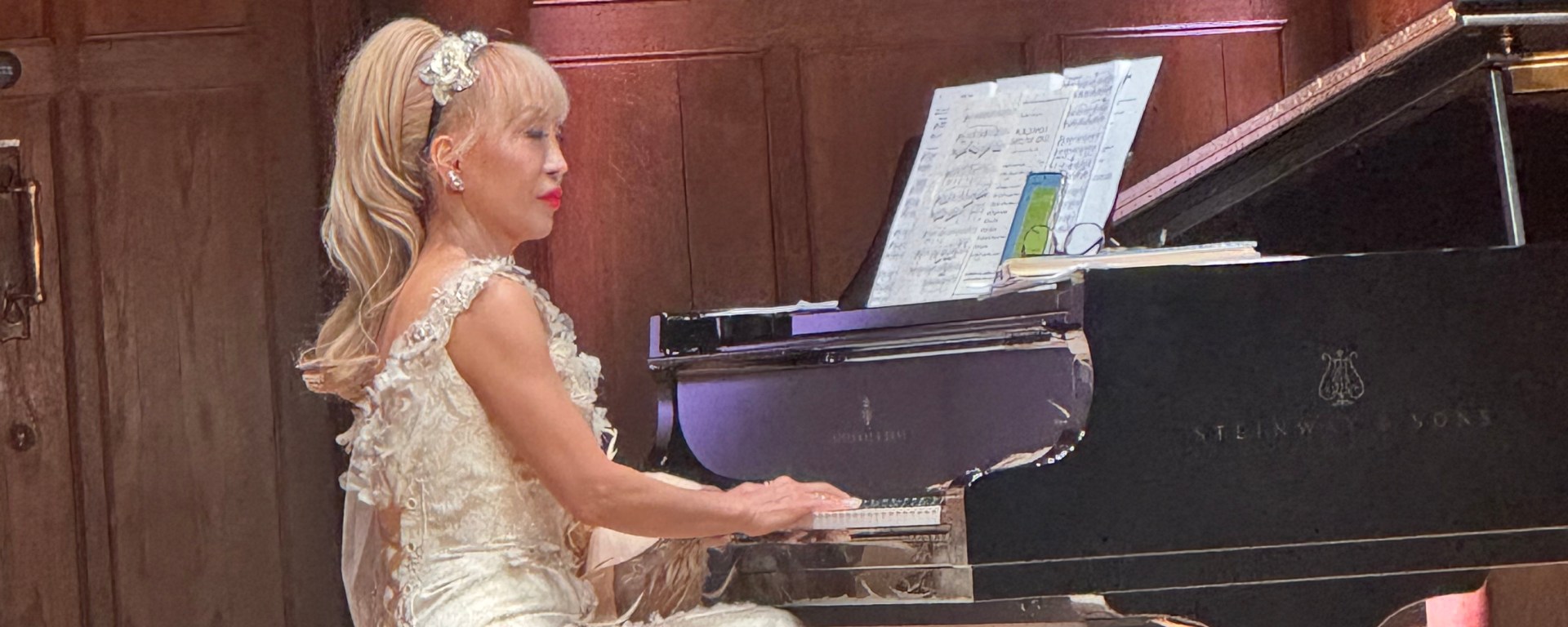
For the encore, Nelson played “Mad About the Boy” on piano. I only ever knew the song through the version made famous by Dinah Washington. However, it was written by Noël Coward for his 1932 revue Words and Music. As Nelson played, it felt as though Jo wanted to join him at the piano too. She followed his encore with one of her own, playing a version of “Arirang”.
The choice brought the evening gently back to Korea. One of Korea’s most enduring folk songs, “Arirang” carries a sense of longing, separation and cultural memory, and its appearance near the end of the concert gave the encore a quieter emotional weight.
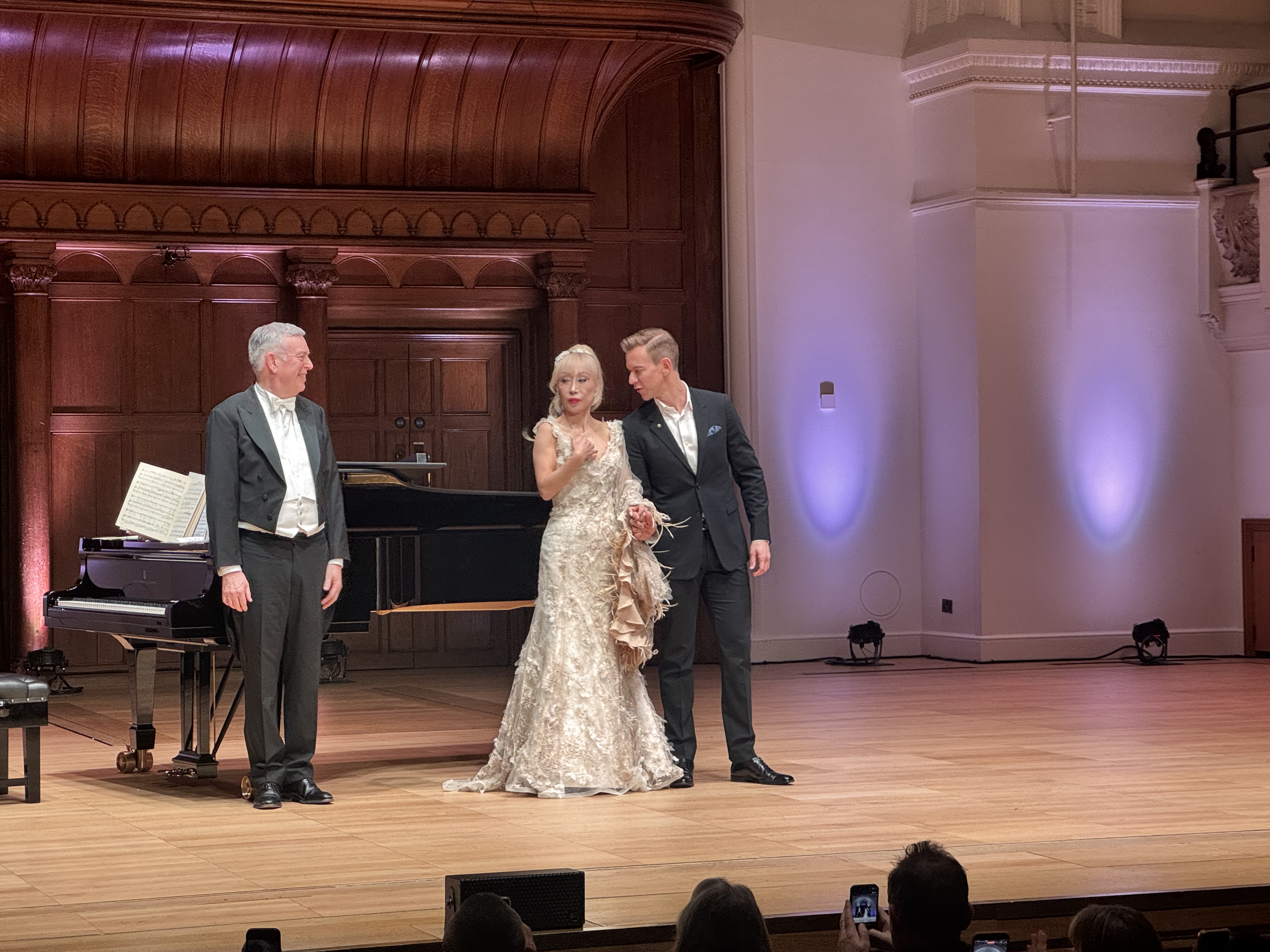
Looking back, there was something moving about first encountering Jo in the context of Korean literature in London, and seeing her again 12 years later in a concert that reflected the breadth of a 40-year international career. I have only glimpsed part of that career, but those same 12 years have marked my own slow growth within Korean cultural writing, starting with my writing for Korea.net and developing into reviews, essays, illustrations and personal reflections. Watching Jo move across so many musical forms reminded me that creative work gains depth through time: through range, repetition, return and the confidence to keep expanding without losing sight of where it began.
After her final encore, a rendition of “Ave Maria”, Jo returned with Martineau and Nelson for their final bows. As she slowly left the stage, she closed the lid of the piano, as if marking the end of the concert once and for all.