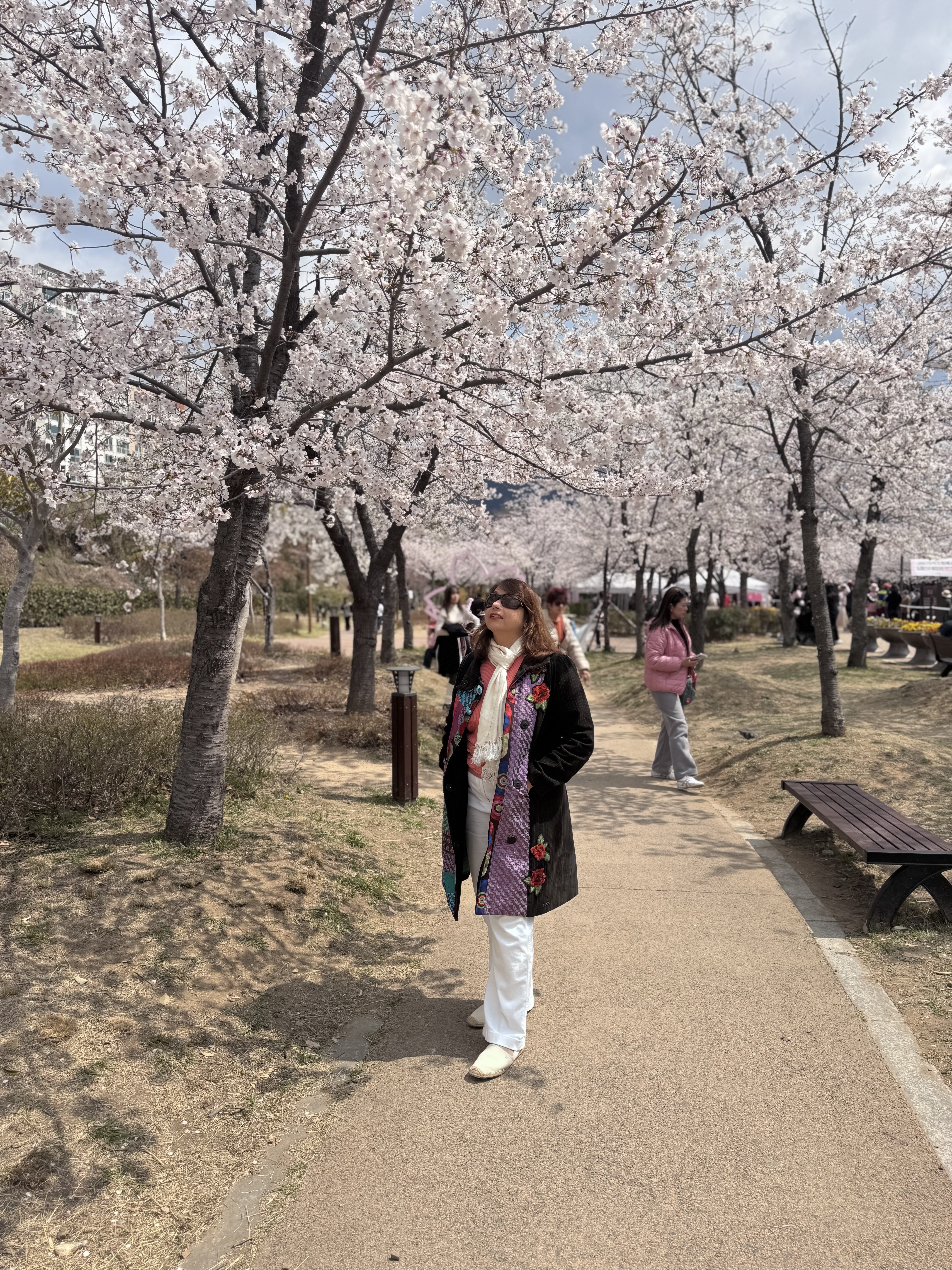

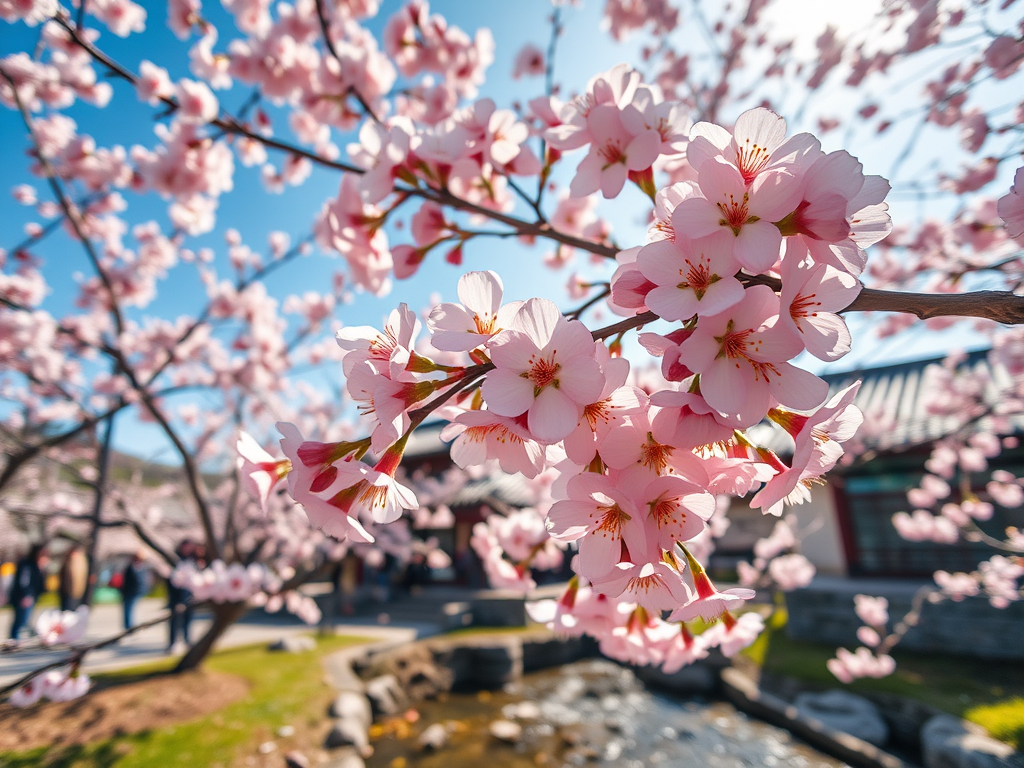
When my mum first mentioned wanting to visit Korea, she didn’t talk about shopping or the bustle of Seoul. She talked about peace. About beauty. About tradition. There were three things she hoped to experience: cherry blossoms, a temple, and a palace. For her, these weren’t just tourist activities—they symbolised stillness, renewal, and something deeper that called to her. So naturally, seeing the cherry blossoms became a priority.
By chance, I came across the Jinhae Cherry Blossom Festival in a guide produced by the Korean Tourism Organisation . It seemed the perfect way to experience spring’s magic.
I arranged our visit to Jinhae for the third day of our twelve-day mother-daughter trip. The first day had been a marathon—more so for my mother than for me. I had a straightforward 12-hour nonstop flight from London to Seoul. But in the space of just 24 hours, my poor mum had touched down in four cities: Kolkata (her point of departure), Singapore (transit), Seoul (her ticketed destination), and finally Busan—her actual endpoint. We met in Seoul within an hour of each other and flew together to Busan.
That evening, we finally arrived at our hotel, tired but relieved. I felt an odd, tender feeling coming back into a city I hadn’t visited in seven years. The city however always felt like home. The last time I had visited Korea in 2018, was for my best friend’s wedding. Before that, I’d flown to Korea, courtesy of Korea.net, as one of twelve Honorary Reporters invited for a week-long visit in 2016. It had been a while, but the city welcomed me like an old friend—familiar in its rhythms, as if no time had passed between us.
Our first meal this time—if you don’t count the sandwich we picked up at Gimpo Airport, which my mum devoured—was the hotel’s fried chicken, ordered late that night.
I’d kept the second day relaxed, allowing us to wake when we pleased and adjust to the jet lag. We stayed local and visited Haeundae Beach, indulging in more fried chicken, of course. Busan made the perfect base to explore from, and we planned to experience the cherry blossoms on our own terms. While many organised tours were available to visit Jinae. I discovered I could use my UK Uber account in Korea which gave us the freedom to build our own itinerary and avoid the rigidity of a 9-hour group round trip.
Jinhae (often spelled “Jinhae-gu”) is a district in the city of Changwon, in South Gyeongsang Province. It lies on Korea’s southeastern coast, near Busan.
I ordered a taxi from our hotel directly to the festival—or so I thought. When we arrived, it looked suspiciously like a local market. With the help of Papago (a brilliant translation app I relied on), I explained where we actually meant to go. Our driver realised we’d veered slightly off course and kindly redirected us. After inching through a sea of traffic, he dropped us off near a park brimming with people. It took approximately an hour to our destination.
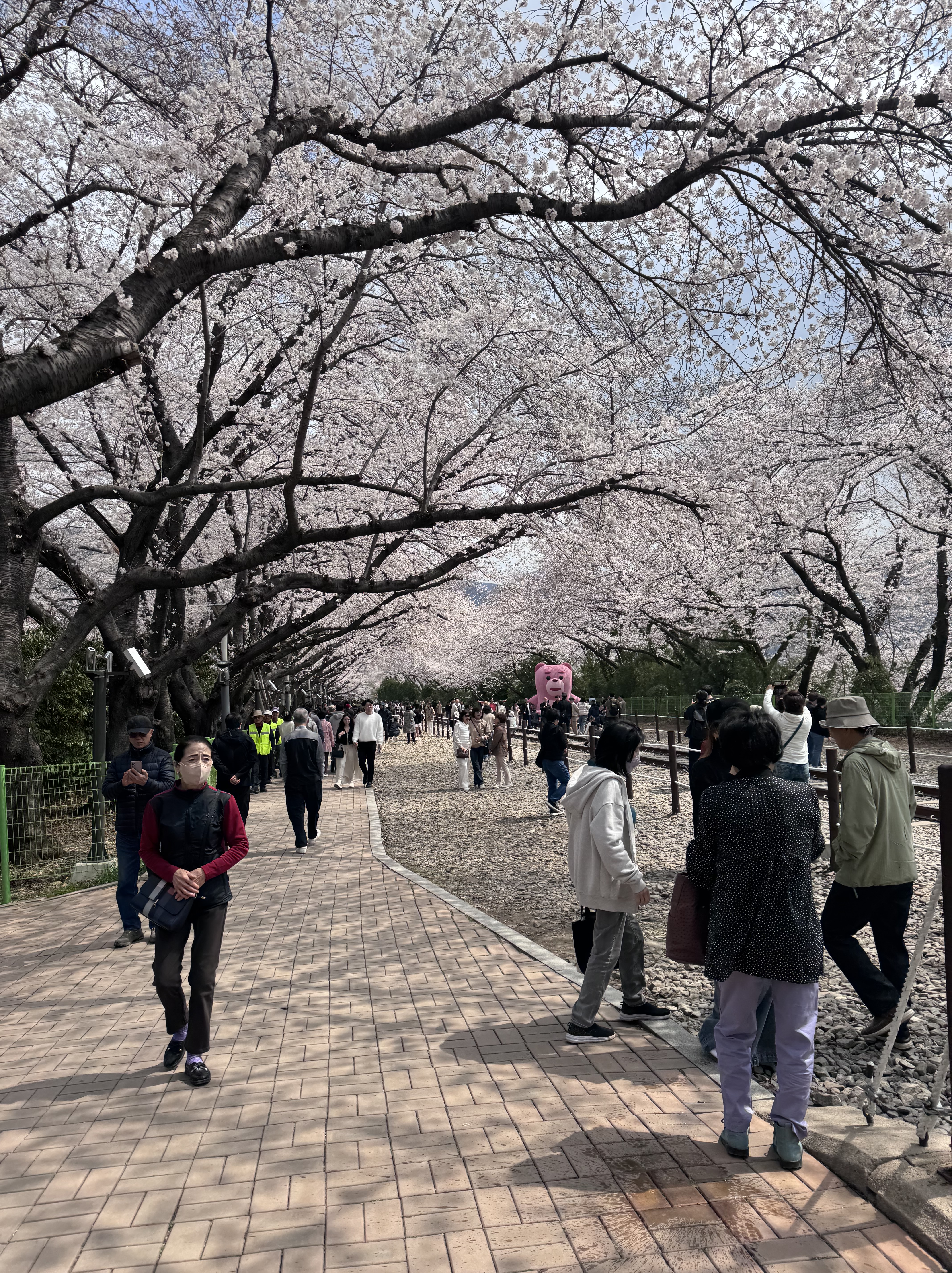
It wasn’t until much later that I discovered more than 2 million people visit the festival each year. Around 360,000 cherry blossom trees bloom, transforming the city into a pastel dream. Also known as Gunhangje, the Jinhae Cherry Blossom Festival has become one of the world’s most celebrated spring events.
Like many festivals, this one began with a different meaning. Its origins date back to April 1932, when locals erected a statue of Admiral Yi Sun-shin and held a memorial ceremony in his honour. His patriotism became a symbol of regional pride and cultural identity. Admiral Yi, famed for his turtle ships during the 1592 Japanese invasions, is remembered as one of history’s great military tacticians—undefeated in 23 battles and posthumously named “Duke of Loyal Valour.” While Jinhae wasn’t the site of his most famous battles, its naval history links the area to his legacy.
At the time, I didn’t yet know much about the history or the scale of the festival. We were just wandering through the crowds, soaking it all in. We found ourselves walking along an old, abandoned railway track with a stationary train where people lined up to take pictures. We skipped the queue—not wanting a front-facing photo—and instead took one by the side.
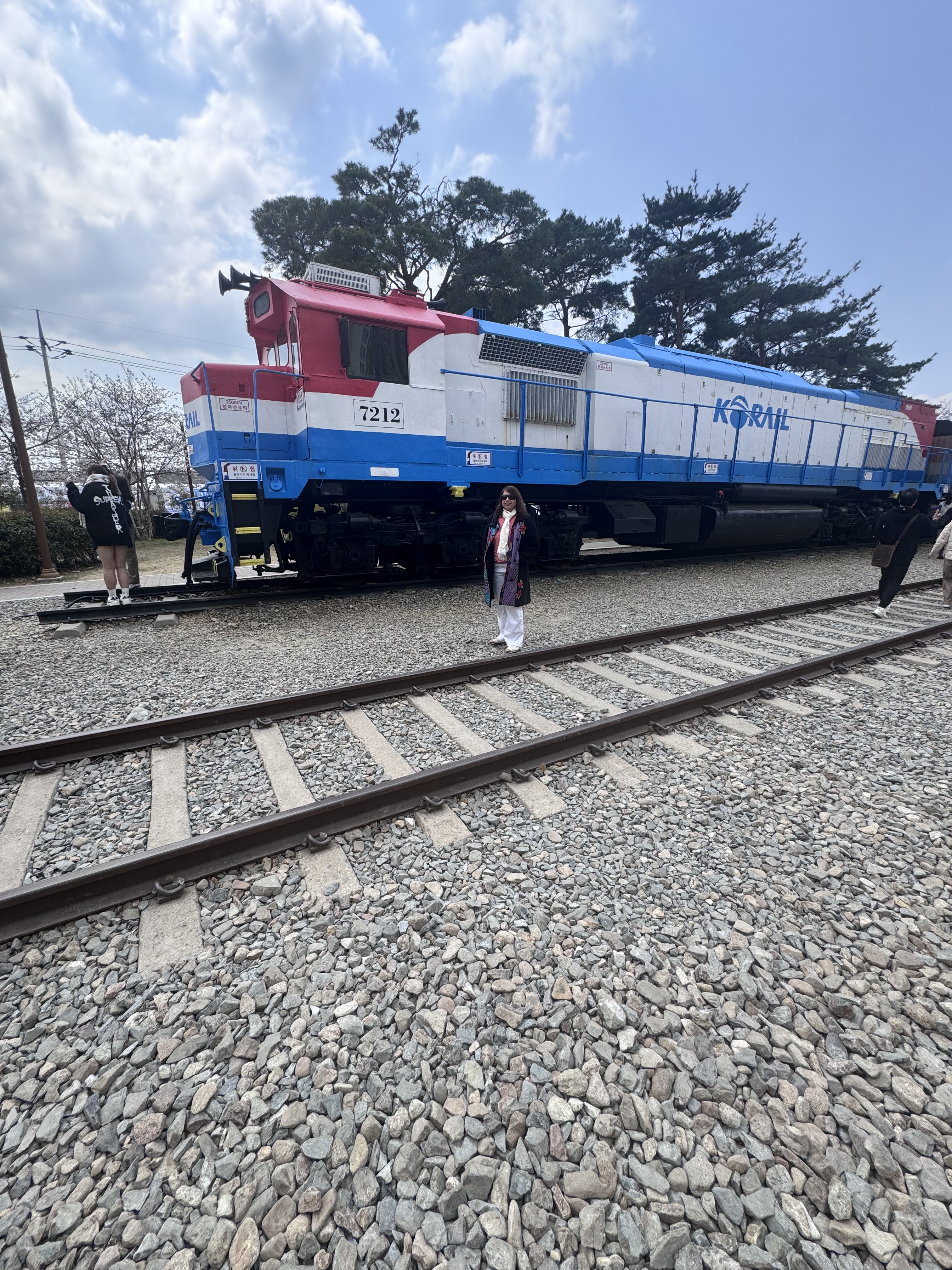
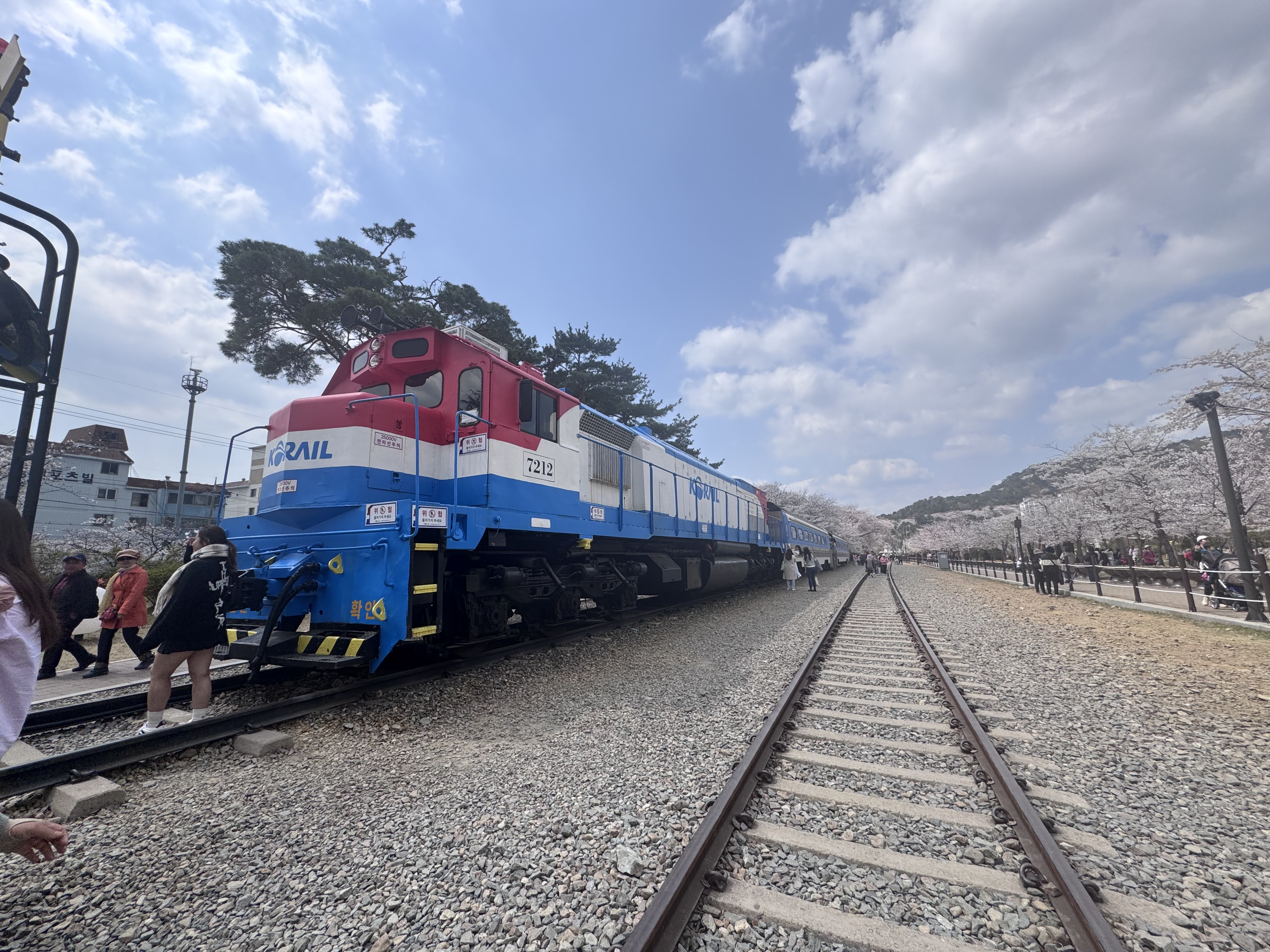
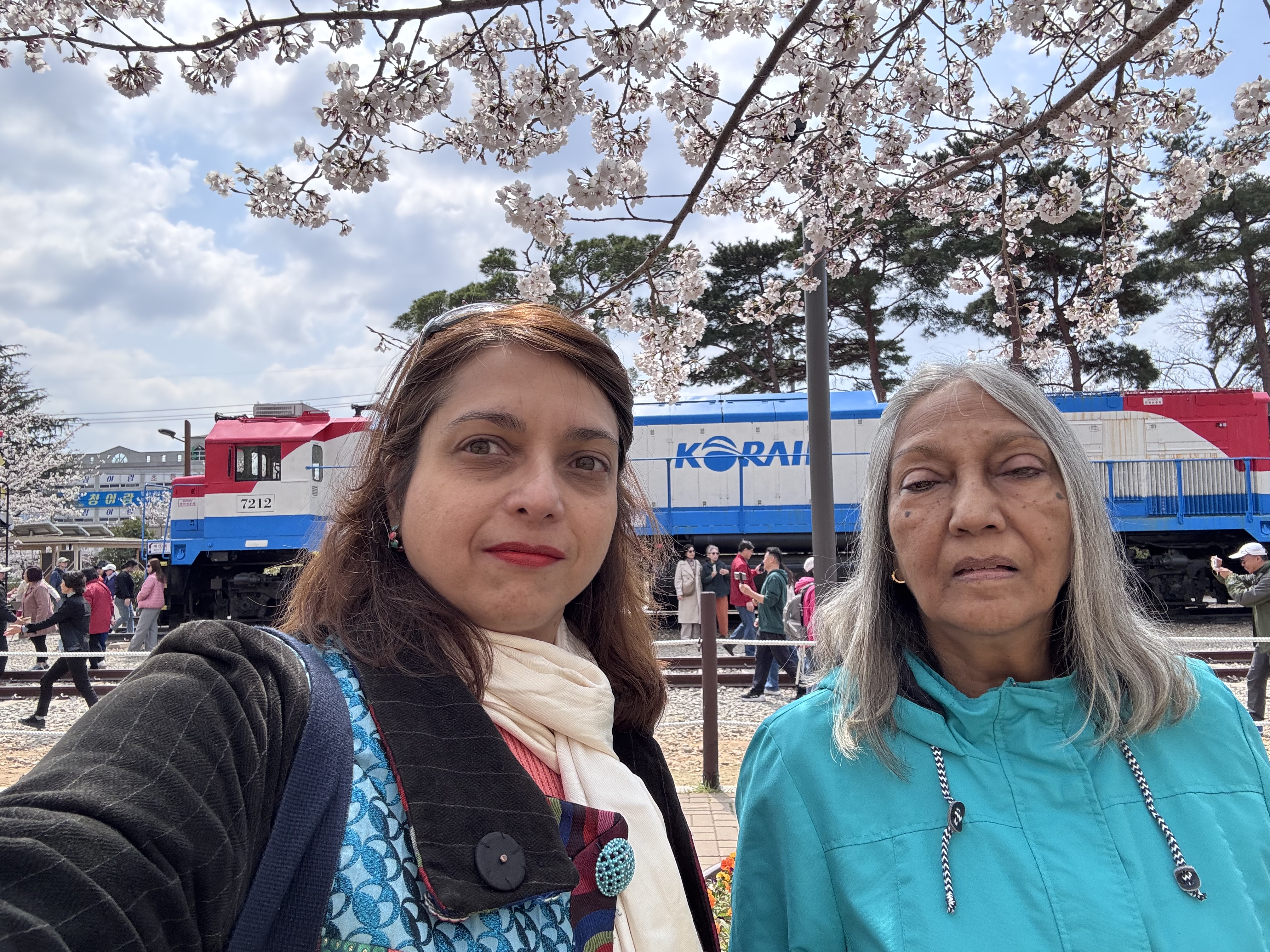
More than just capturing the moment on our phones, it felt healing to walk through that space. Underneath the cherry trees, petals fluttered down like fragrant snowflakes. The air was thick with their delicate scent. It felt as though time had slowed, and we were walking through a living painting, our footsteps soft on the ground. You could tell people had come from far and wide—with friends, families, romantic partners—just to walk under the blossoms.
Later, we stepped into a small coffee shop by Gyeonghwa Station. We sat quietly, drinking in the stillness as much as the coffee. The shop had a rustic charm, with only a few thoughtfully placed pictures on the walls. One in particular caught my eye: a delicate ink drawing of the coffee shop itself, with a cherry tree in full bloom in the foreground. The petals looked as though they’d been brushed on with a whisper. The picture wasn’t framed—just gently taped to the wall, as if left behind by a regular or gifted by someone who had once sat where we were now sitting. It felt like a quiet tribute not only to the shop, but to the fleeting beauty of the season.
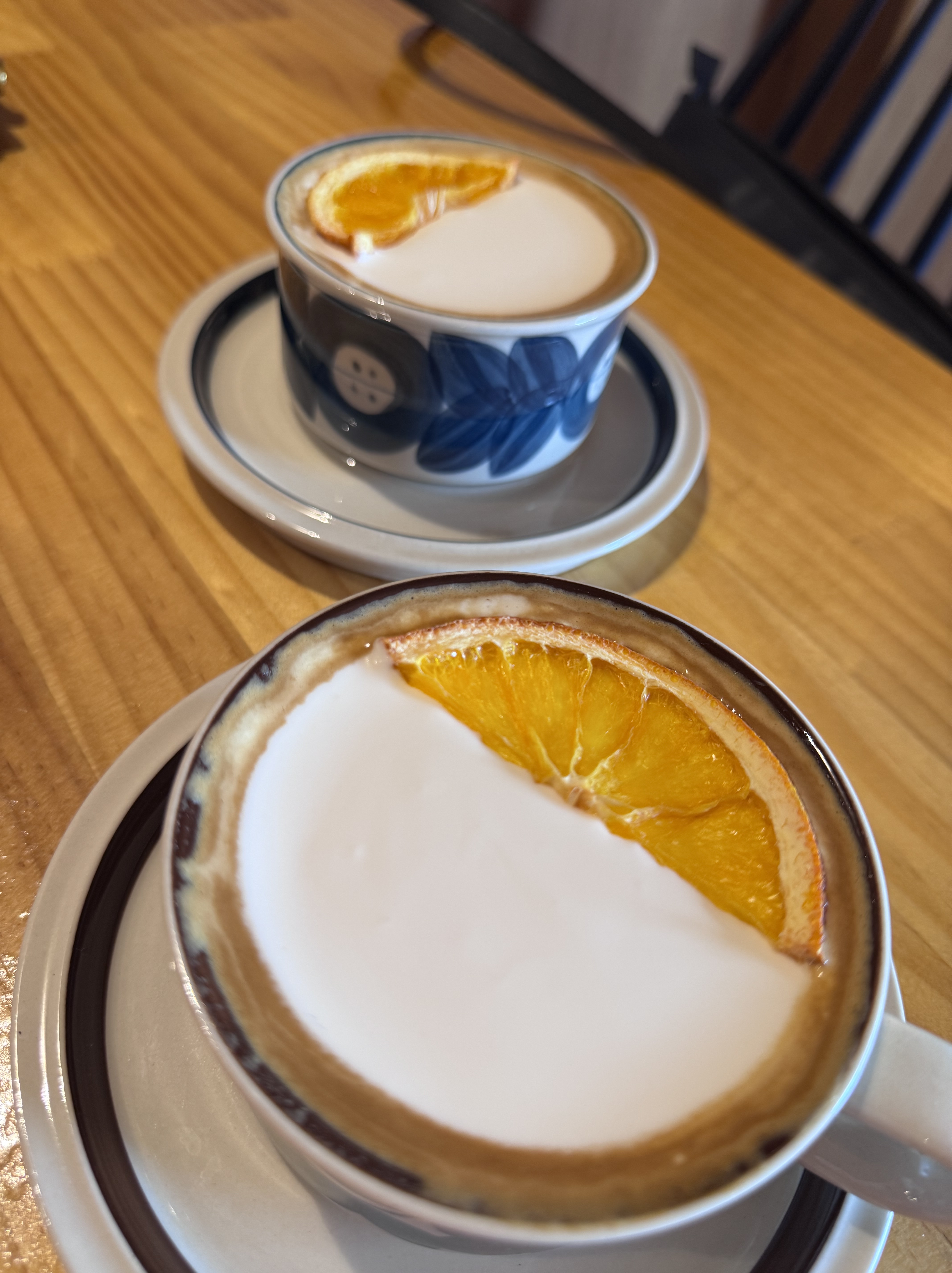
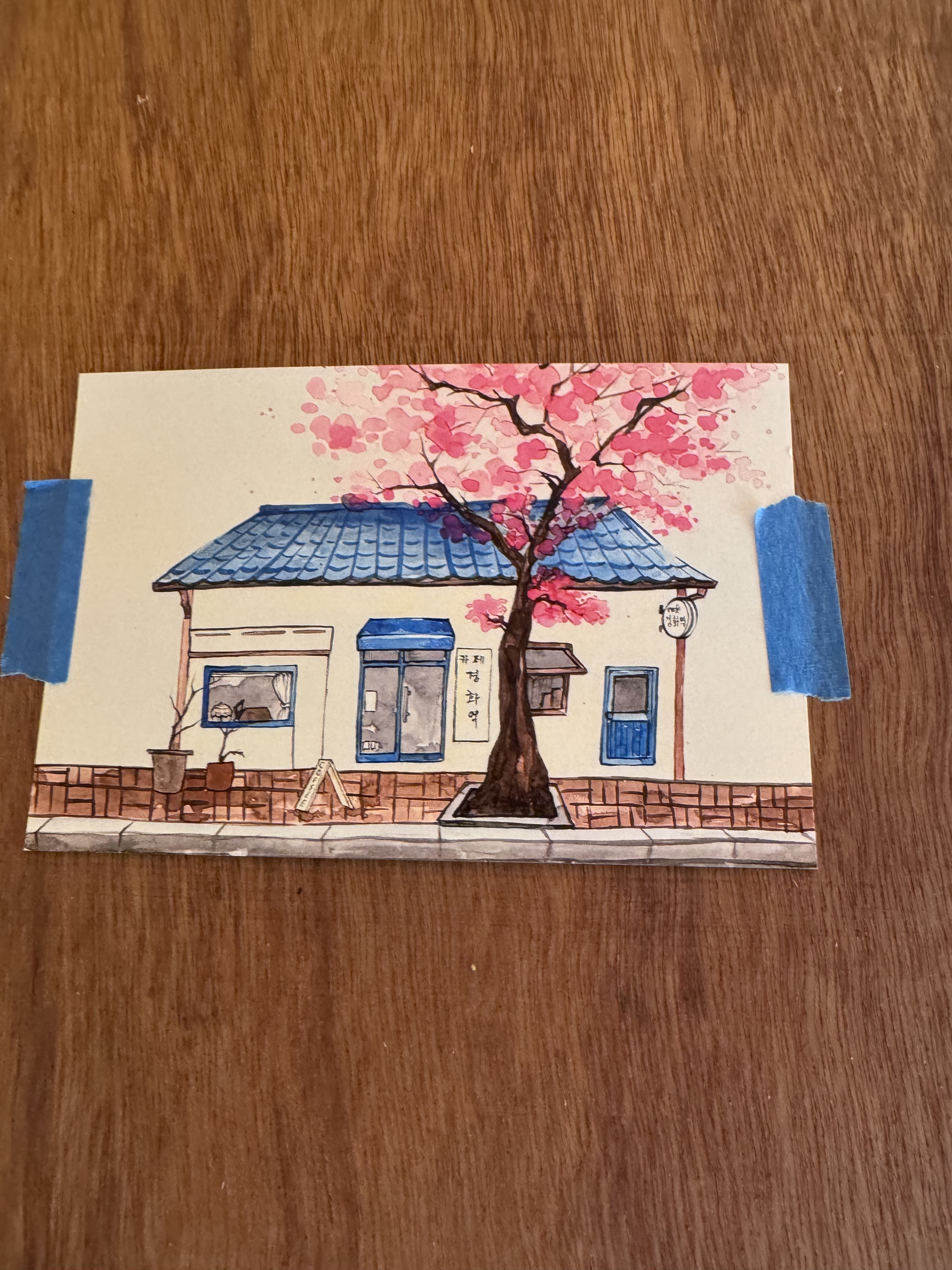
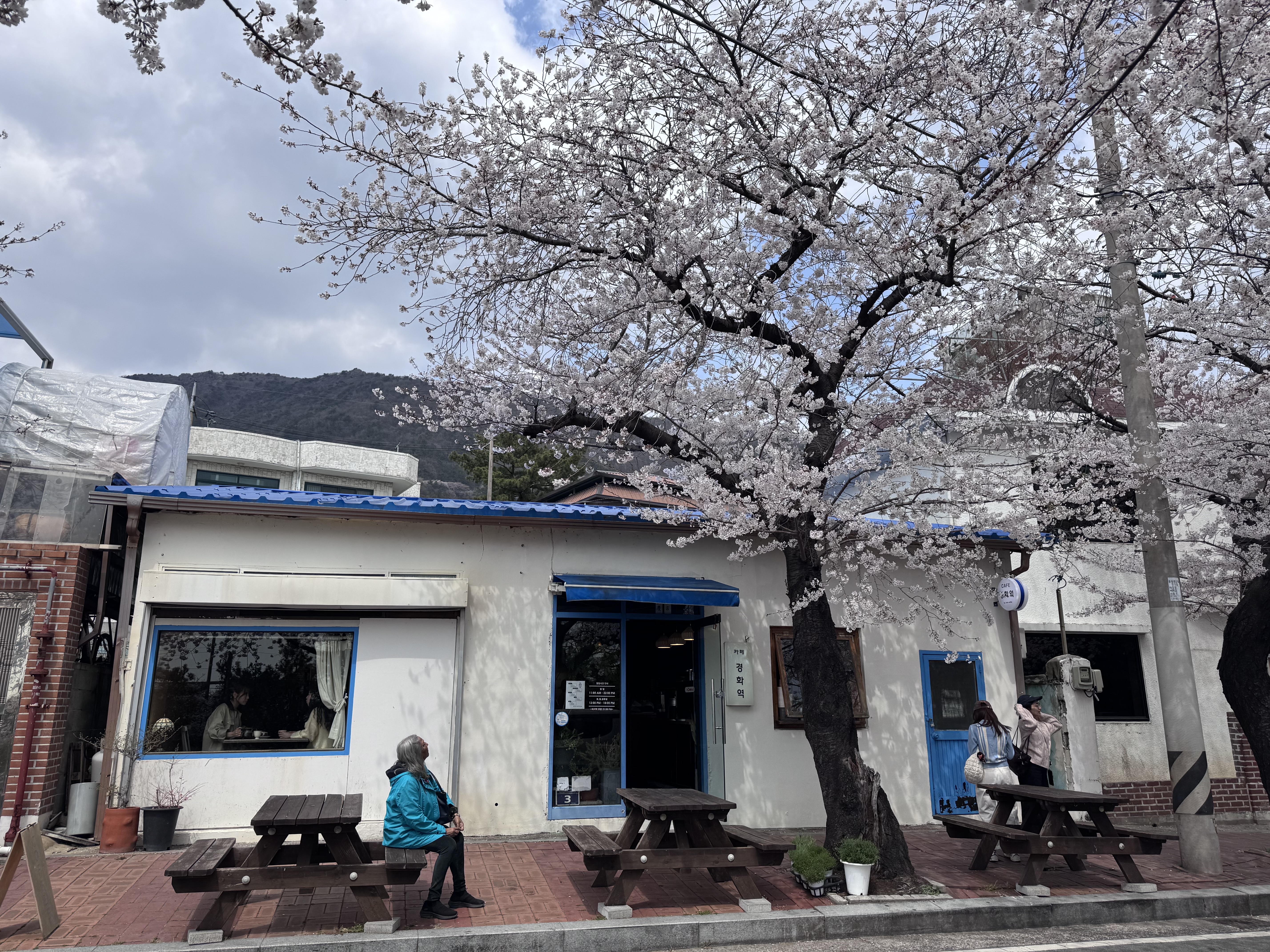
It was the kind of place I could return to again and again—a space to read, write, or sketch, lost in my own little world. In that moment, with the clink of cups and soft murmur of conversation around us, it felt as if time itself had paused to let us breathe.
The writing, scribbled on a small brown napkin in Korean (which I later translated), might have read: “Authenticity in every cup, sincerity in every moment.”
— Cafe Gyeonghwa Station
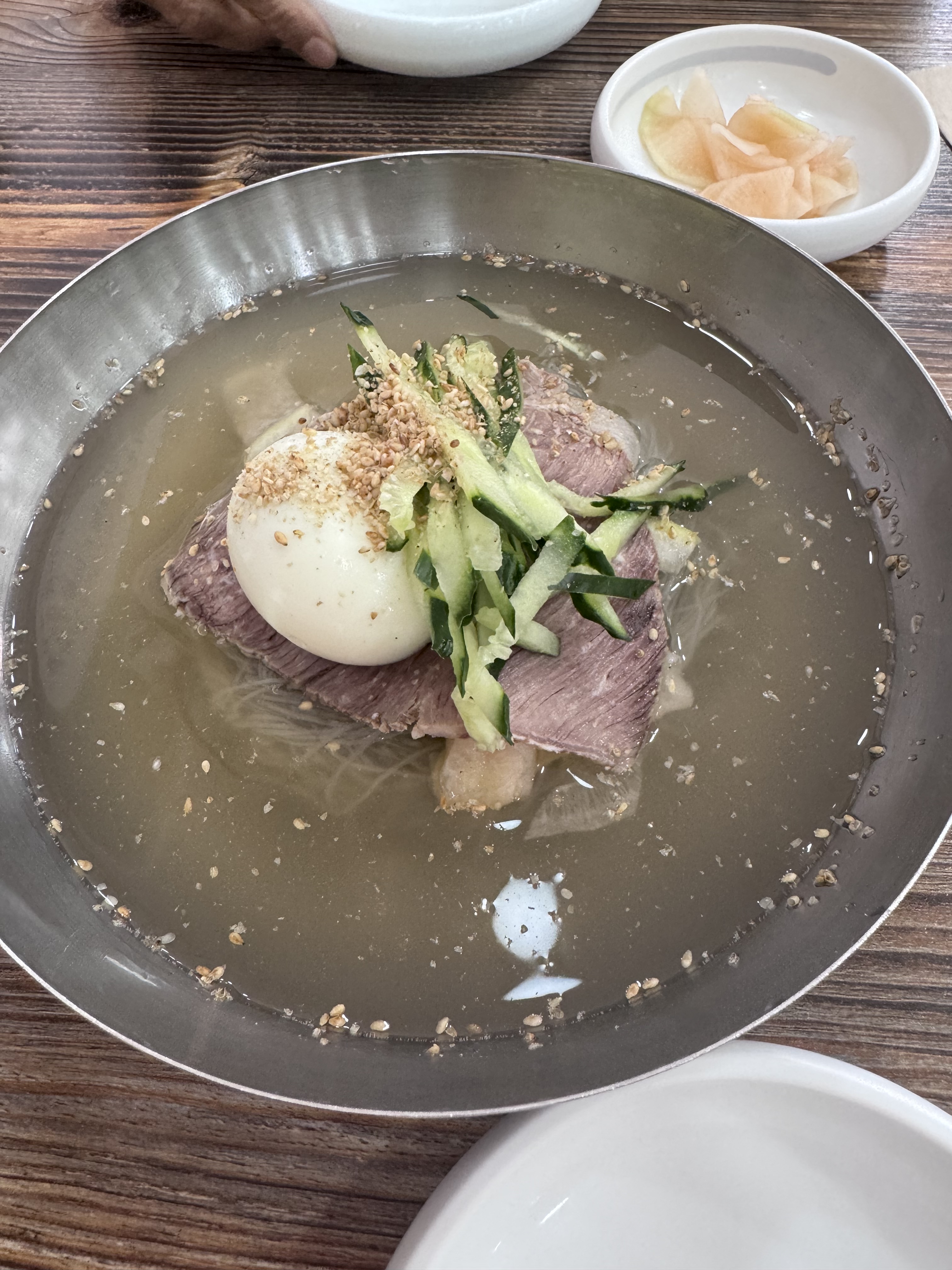
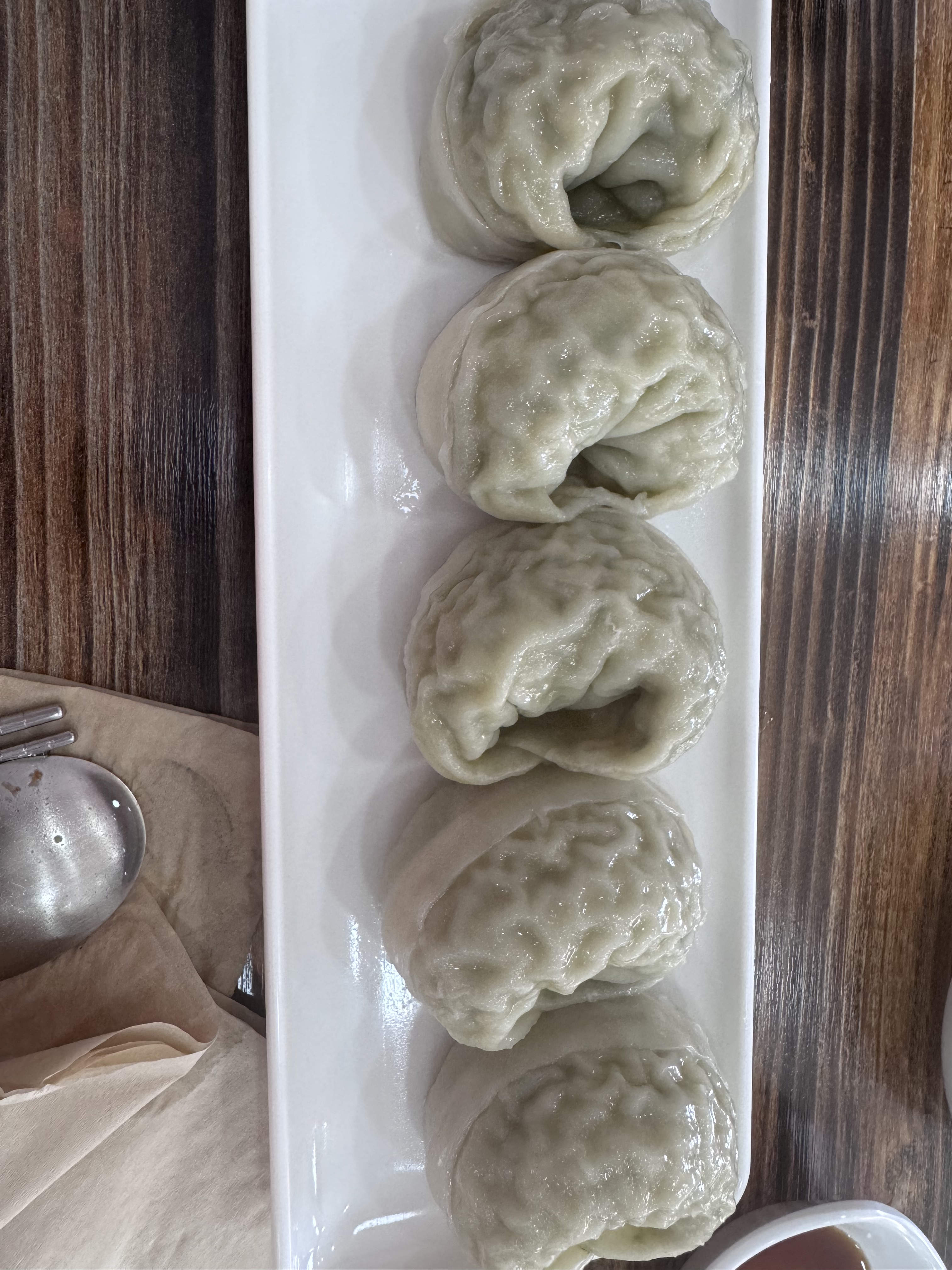
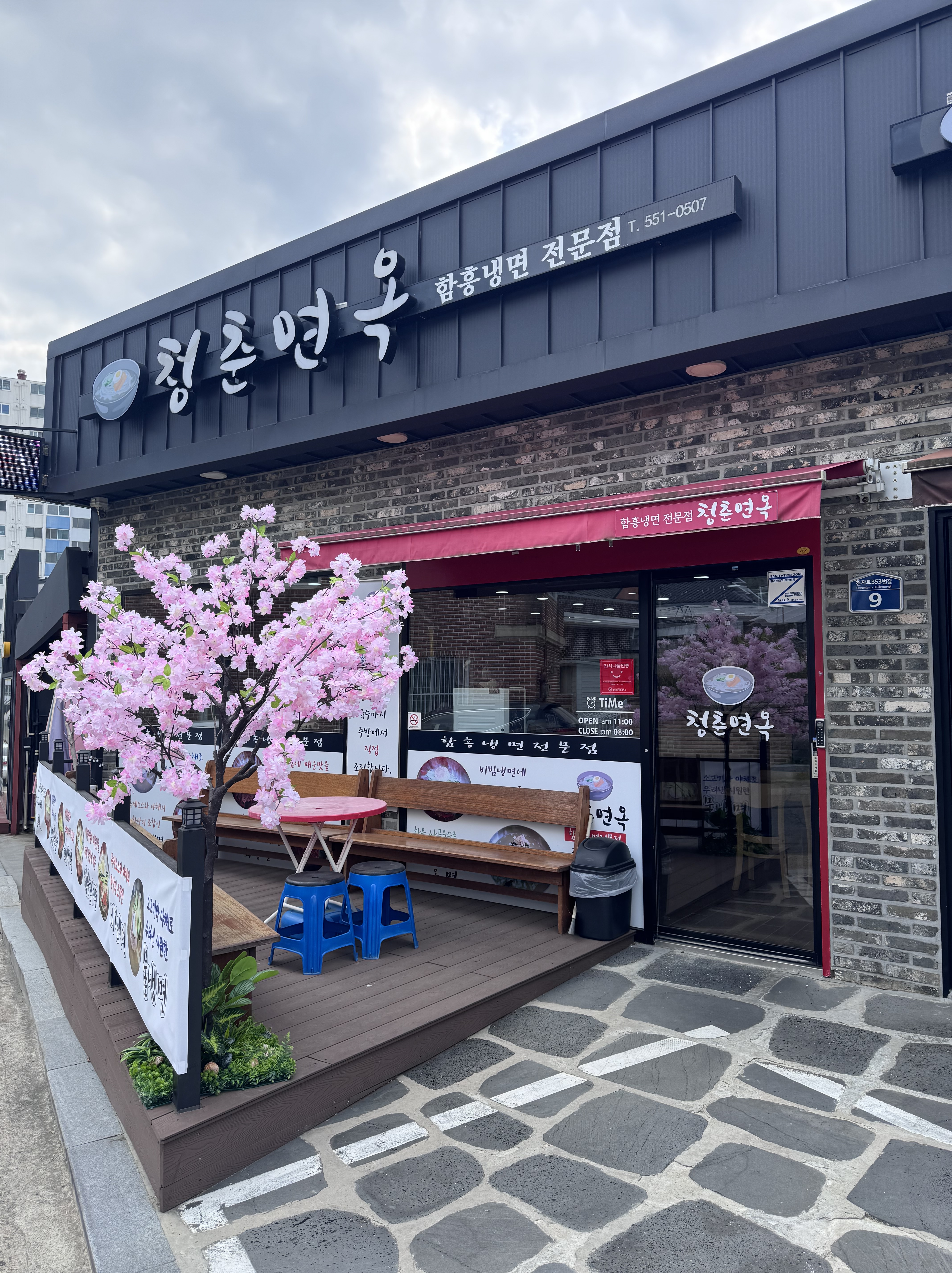
It was a quiet philosophy that lingered long after the coffee had gone cold. From there, we made our way to a small restaurant by the wonder of Uber again. I had searched for a particular restaurant that suggested it was serving sujebi (hand-torn noodle soup), but instead we ordered mul naengmyeon (cold buckwheat noodles in broth) and dumplings. I asked for five, forgetting just how enormous Korean dumplings are! Luckily, my appetite had traveled with me, and between my mum and me, we polished off everything. The woman running the place chatted with us between serving others, though for the most part, we had the cosy space to ourselves.
After our meal, feeling full and a little sleepy, we grabbed a taxi back to Busan before rush hour hit. A nap was much needed—after all, it was only day three, and jet lag was still hanging around. There was still more to see in Jinhae—like the iconic cherry blossoms that lined Yeojwacheon Stream, where lanterns hang above the water and petals drift like snow. We also missed Anmingogae Hill, a spot that offers a sweeping view of Jinhae blanketed in pink, with naval ships nestled in the harbour below. But we knew we had to leave some places undiscovered, saving them like folded corners in a book—to return to next time, and experience the city anew.
When we later looked back on our ten-day trip (excluding our arrival and departure days), my mum fondly recalled Jinhae. It was our first encounter with Korea’s cherry blossoms, which bloom only briefly each April. For her, it wasn’t just about ticking off a list. It was about standing beneath something fleeting and beautiful, together. That single day—of petals and quiet coffee, soft steps and laughter—became one of the brightest memories that stayed with me.