


The sky over the River Thames is a flat, dull grey — no shimmering light reflects on the water. Yet, despite the lack of colour, the city holds a quiet charm as St Paul’s Cathedral rests gracefully, its dome-shaped silhouette etched against the London skyline. The colour, instead, comes from the conversation I’m having at the Tate Modern café with Nicole Jihye Choi, a colour analyst who has travelled to London to host a series of workshops for the Korean Cultural Centre. (In the pink colour – Image consultant)

As we talk, her words unfold like a carefully layered canvas — soft, considered, and precise — taking me back to the moment it all began for her.
Before we delve deeper, it’s worth asking: what exactly is a colour analyst? It’s a question she gets — a lot. Sitting in the Tate Modern, I jokingly tell Nicole she could easily go around saying she analyses colours in traditional paintings. However, in her case — and for most others in the profession — it’s about studying how different colours interact with a person’s natural features to help them find clothing and tones that enhance their appearance and boost confidence. It’s a blend of art and science, with its modern roots in the U.S., primarily based on Colour Me Beautiful by Carole Jackson. Though, it’s fair to say foundational ideas around colour theory and personal colour existed long before that.
Nicole had always been interested in art. At the tender age of 15, she made the bold decision to move to the United States alone to study and learn English, while her family remained in Korea. After finishing high school, she applied to three colleges in New York to pursue her first love — art — and she was successful. However, in the end, she felt a strong pull to return to Korea to be closer to family and friends. As the Korean college system had different requirements, she ended up majoring in Global Cooperation instead.
After graduating, she found a job in marketing within the IT industry. But five years in, she began yearning to do something more personal — to apply her branding and marketing skills not to products, but to people. She wanted to help individuals express themselves more clearly and confidently. Around that time, a close friend encouraged her to try personal colour analysis. The experience was illuminating, and Nicole felt that if she entered the business herself, she could make it more profitable by putting her marketing expertise to use. Soon after, she trained under a certified expert and, after just three months, launched her own business.
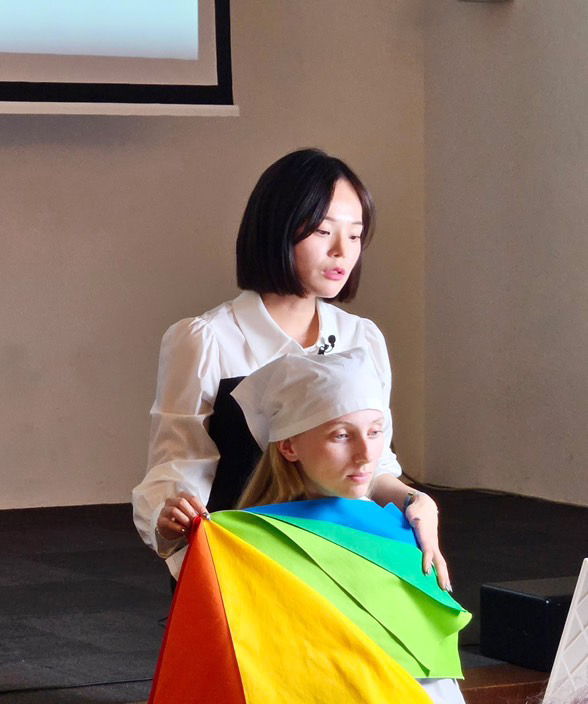
That was four years ago. Since then, Nicole has held countless personal and group sessions, travelling to Spain, Italy, and the UK — with the Czech Republic and Hungary next on the horizon. She sees this work as a personal calling — a way of positively influencing people and giving them a new sense of self-awareness and confidence.
Her youngest client was 12 — a girl who came with her mother all the way from the UAE. Her oldest has been 70, from the United States. The latter told Nicole she had always instinctively gravitated towards colours that suited her — and it made sense, she said, because she consistently received compliments when wearing them.
Nicole’s advice to anyone considering colour analysis? Don’t rush the process. “Take your time getting comfortable with the colours,” she says. “It’s okay to use your favourite colours and your own preferences. Colour is a way to express yourself. It’s important to admit what your favourite colour is — and to keep wearing it, even as you slowly integrate your seasonal palette.”
In her one-on-one sessions, Nicole does not stop at colour. She also advises clients on textures, patterns, makeup, and jewellery and even hair — helping them understand how everything works together to create a harmonious, authentic look.


Nicole during her sessions at the Korean Cultural Centre UK, 2025
Earlier in the week, I took part in one of her workshops. I had no idea what to expect, other than being told to wear no make-up and stick to achromatic colours. Years ago, I had been told I was a Winter (one of the four seasonal categories used in personal colour analysis), but that was soon to be disproved. Nicole revealed that I was actually an Autumn. There are many myths surrounding colour analysis, and Nicole feels she’s on a personal mission to dispel them.
She explains that it’s not about skin tone but undertones — particularly in the lips and eyes — that determine your seasonal palette. Autumn types, I learn, look best in rich, earthy, natural tones: camel, olive, warm beige, forest green, and tomato red. I mentally scan my wardrobe — mostly white shirts and a lot of black. “Why?” I wonder, knowing I’ll now need to rethink my entire approach to dressing.
Nicole says black is often the hardest colour for people to give up. She recalls one client from the US who became visibly distraught after being told black was not in her palette. Despite Nicole ’s efforts to reframe the session positively, the client was unable to recover from the shock. “Black is a favourite for so many,” she says. But it is only those in the Winter categories that can wear it effortlessly.
I show her a photo of myself at a Korean wedding with my best friend a few years ago, wearing a black dress. “You pulled it off because it had a pattern and pale yellow flowers she reassures me. “If it had been solid black, it would not have worked.” I breathe a quiet sigh of relief.
I ask her whether the dominance of black and neutral tones in UK shops affects how people dress. She says the same thing happens in Korea — weather, trends, and cultural temperament all play a role in the colours people gravitate towards. She mentions her workshop in Spain, where people seemed more open and passionate about experimenting with colour.

I’m curious why colour analysis has become particularly popular in Korea. “It has been trendy for about five years,” Nicole explains. “When I started my business four years ago, I already felt a little late.” She believes part of its appeal lies in Koreans’ affinity for categorisation — whether it’s blood types or MBTI personality types. “As Koreans, we’re obsessed with these things,” she says. “Not just to understand ourselves, but to better understand others too.”
Colour analysis, however, goes beyond categorisation. “It’s more personal than blood types or MBTI,” Nicole continues. “It helps people understand themselves in a practical way.” She notes that it plays a useful role in daily life — from shopping for clothes and choosing nail polish to getting your hair done. “It makes people feel safe,” she adds. “You’re less likely to make expensive mistakes with colours that don’t suit you.”
She also points to deeper cultural reasons behind its popularity. “In Korea, personal appearance is considered important. Especially when it comes to dress and manners — these are seen as signs of respect and consideration for others. Colour analysis helps people present themselves thoughtfully and confidently.”
Of course, Korea’s global reputation for skincare and beauty has helped fuel the trend. Many non-Koreans seek out Korean consultants, drawn by the strong association between colour analysis and Korean beauty culture.
The trend gained new visibility recently, especially after a video featuring actor Robert Pattinson went viral. As part of the promotional campaign for Mickey 17, directed by Bong Joon-ho, Pattinson underwent a colour analysis — and his candid, slightly bewildered reaction brought new global attention to the practice.
Having done this work for a while, I wonder whether Nicole finds herself mentally “correcting” strangers’ colour choices. She laughs and tells me about a time she was in the car with her mother and saw a woman at a crossing. “Everything about her look was cool-toned — except her lipstick. It was orange.” She wanted to leap out and offer advice, but her mother stopped her. Still, the instinct remains. “I love influencing people,” she says.
Before we wrap up, I steer the conversation toward Korean literature. We talk briefly about Han Kang — the author who won the Nobel Prize in Literature last year. Nicole’s eyes light up. “She is incredible,” she says with awe. I ask, half-jokingly, “What season is Han Kang?” At first glance, Nicole suggests Summer. Would she like to do a personal colour analysis for the author? “Absolutely,” she smiles. Han Kang is, after all, someone who is often dressed head-to-toe in black — like most of us.
That leads me to ask about Nicole’s own seasonal palette. Is her wardrobe entirely made up of Summer shades — the category she falls into? She laughs. “I do have a couple of black items” she smiles coyly… . just like the rest of us.
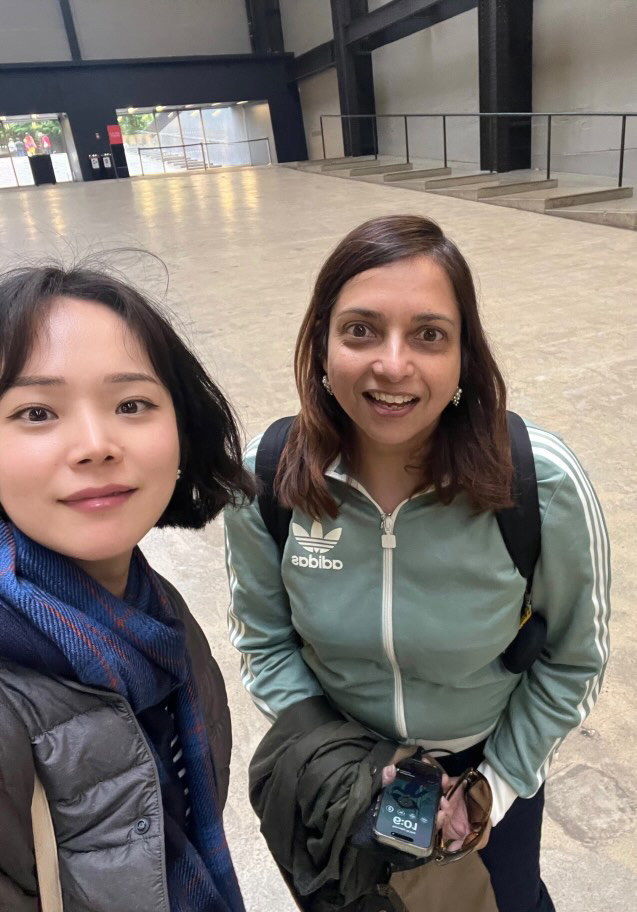
All images used in this article were provided by Nicole and are used with permission.
A version of this articles appears on Korea.Net Honorary Reporters Hub
 Diya on Korea