


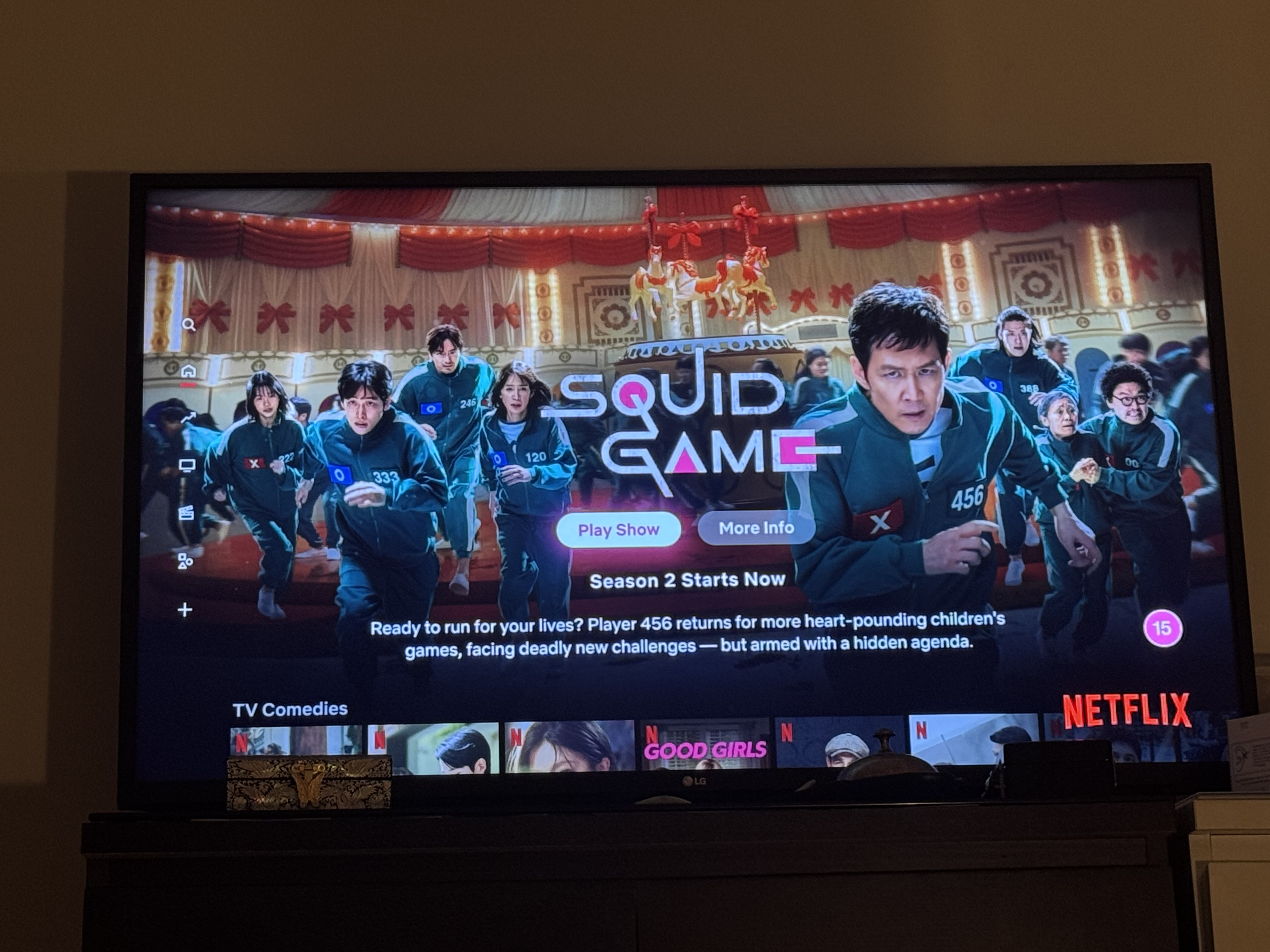
I’m writing this while midway through watching Season 2, so my thoughts are based on what I’ve seen so far. If you’re not caught up, be aware there may be some spoilers ahead.
What is it about Squid Game that has captured the curiosity of television audiences worldwide? Available data shows that Squid Game Season 2 is exceptionally popular, breaking several Netflix viewership records. It gained 68 million views in its first week, surpassing the previous record held by Wednesday Season 1. Additionally, it achieved 132 million global viewing hours, significantly higher than the first season’s record. It currently ranks as the third most-watched Netflix series of all time, behind only the first season of Squid Game and Wednesday.
However, beyond its impressive statistics, the series resonates with audiences because it presents an extreme yet eerily recognisable version of reality. Squid Game highlights the moments in life where people face grave choices—choosing easy money over something far more valuable. It forces viewers to confront unsettling questions: Does the series expose the ugliest sides of human nature? Does it reflect a world where people are willing to risk their lives for the chance to escape financial ruin?
The Brutality of Desperation and the Illusion of Choice
The show portrays the harsh reality of a society where survival is often determined by competition rather than morality. The contestants, drowning in insurmountable debt and despair, are presented with a lifeline—but one that comes with deadly consequences. They are willing to risk everything for 45.6 billion won (approximately £27 million GBP), even if it means sacrificing others in the process. This mirrors the ruthless nature of real-world economic struggles, where financial hardship can push people into making unthinkable decisions.
The burden of guilt is another powerful theme. Seong Gi-hun, the protagonist, ultimately wins, but he is unable to enjoy his wealth, knowing it came at the cost of 455 lives. His decision to seek justice instead of moving on demonstrates the devastating impact of survivor’s guilt. It raises an important question: Does victory mean anything when it is built on the suffering of others?
The Thought-Provoking Message of Episode 2
One of the most compelling moments I have found so far in Season 2 occurs in Episode 2. The Salesman, played by Gong Yoo, approaches homeless individuals in a park and offers them a choice: a free meal or a lottery ticket. The logic seems clear—winning the lottery could provide endless meals, whereas taking the bread would only satisfy short-term hunger. Most choose the lottery ticket, hoping for a life-changing outcome.
However, when they win nothing, The Salesman throws away the sweet bread he had just purchased and stamps on it in front of them. As a viewer, I was disturbed by this wastefulness, but the message was clear: they had a choice, and they could not have both. This moment encapsulates the essence of Squid Game—it is not just about brutal violence but about the extreme nature of choice and the unsettling reality that, in life, some paths cannot be reversed.
Why Squid Game Feels Personal
Being a fan of many aspects of Korean culture, I first heard about Squid Game when it was gaining popularity in September 2021. Two male colleagues at work mentioned it—one had watched it, while the other had only heard about it but was intrigued. They recommended it to me, and I quickly realised it was not just another drama—it was a high-stakes game of life and death.
The appeal of Squid Game lies in its ability to force viewers to question their own decisions. If faced with the same circumstances, what would we do? The participants in the game are not criminals or villains, but ordinary individuals who have been pushed to their limits by debt, misfortune, and a lack of opportunities. They are given a chance to win a fortune, but at a terrible cost. It is a stark metaphor for the real-world struggles of those at the bottom of society.
The Anticipation for Season 2 and Beyond
Following the launch of Season 2, there was a surge of excitement—launch parties, themed events, and an overwhelming amount of discussion. However, I deliberately delayed watching it until the initial frenzy had passed. With a relatively quiet weekend ahead, filled with study and reflection, I decided it was the perfect time to immerse myself in the series.
It is fascinating to consider that the creator of Squid Game originally intended it to be a standalone story. Yet, the global demand for more has led to its expansion. Most people I know who have watched both seasons have found Season 2 compelling. Is it because Seong Gi-hun has returned, driven by revenge and a desire to put an end to this dehumanising spectacle?
In one intense scene, when the new contestants are playing Red Light, Green Light, Gi-hun desperately tries to warn them that those who fail will not simply lose—they will die. Despite his pleas, many doubt his motives, suspecting he is trying to manipulate them for personal gain. This moment highlights the mob mentality—why should they believe him? Only when they witness the horrific reality do they realise he was telling the truth. Yet, even then, greed takes over when they see money being deposited into the giant piggy bank above them. Still, they choose to stay.
With 3.5 episodes left to watch, I already know that Squid Game Season 3 is in the works. Perhaps, if I am lucky, I will be able to request an invitation to the Netflix launch event. Until then, I will continue watching, questioning, and reflecting on the series’ deeper messages about desperation, choice, and survival.
 Diya on Korea