

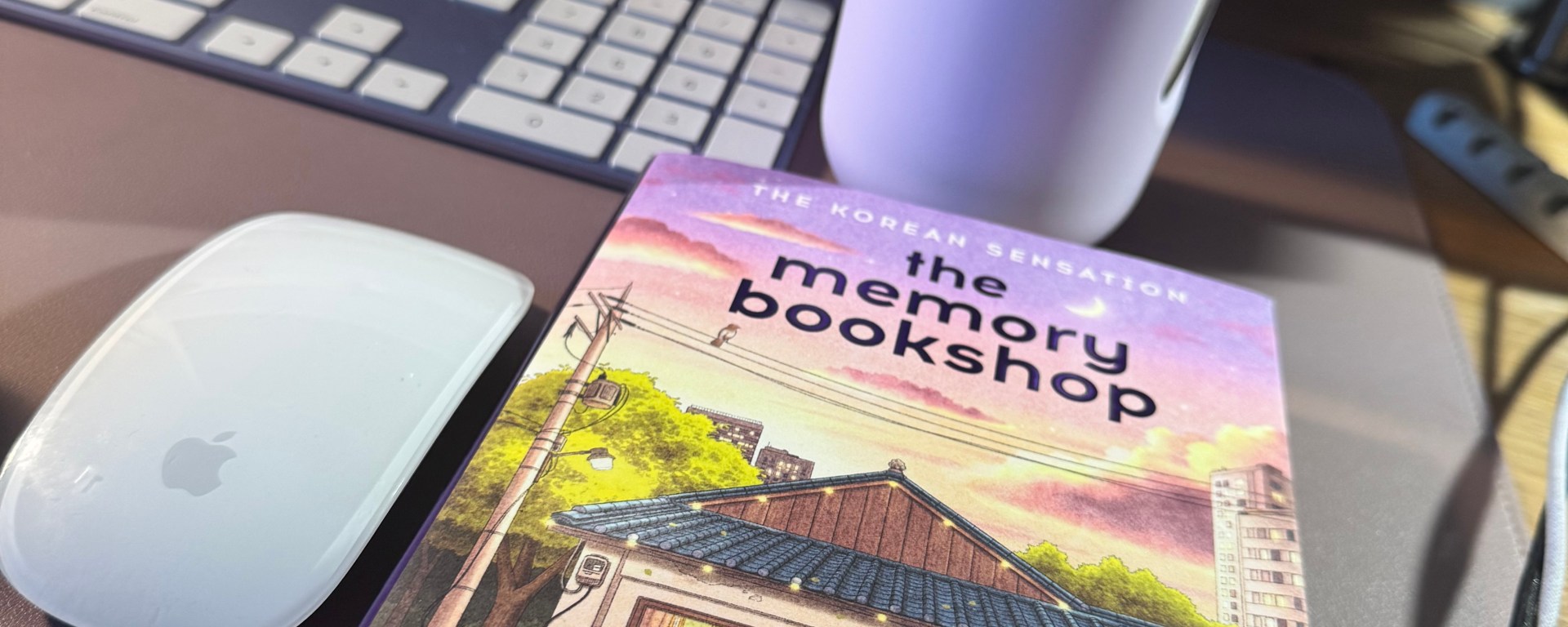
I wonder what I might discover if I stepped into the memory bookshop imagined in the novel by Song Yu-jeong, translated by Shanna Tan.
Would I encounter the memories of my own life, arranged as neatly as those in the novel? Would they appear as sketch fragments — half-formed impressions where language falters — or as carefully written accounts of moments I believed I understood?
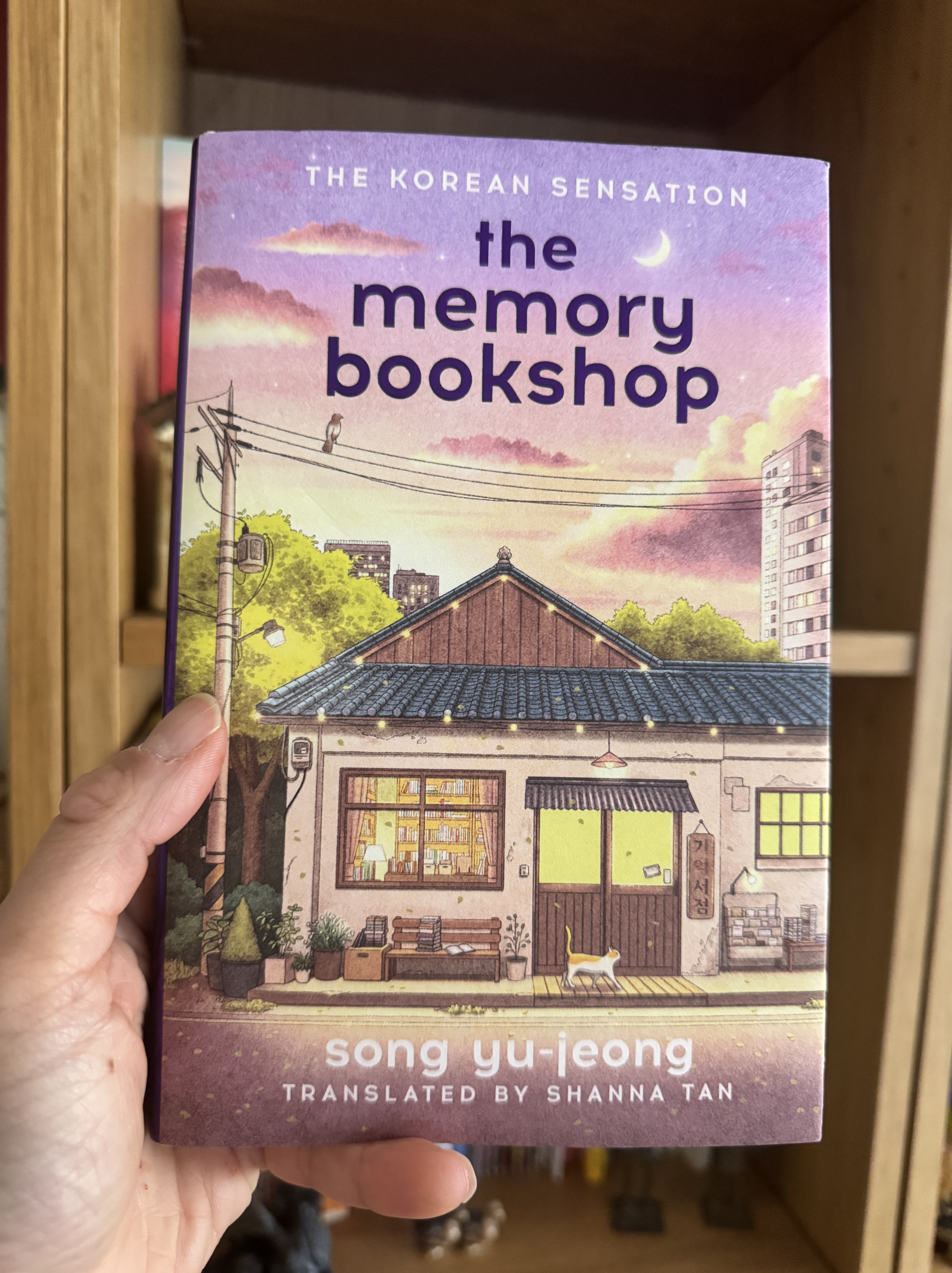
We are drawn into the story through a first-person perspective from the outset. We meet Kim Jiwon, who is suffering from anxiety and depression and struggles to sleep. She attends a clinic, where a doctor diagnoses her as grieving for too long. Can one grieve for too long? The idea of a fixed or scheduled period feels almost insulting. Is grief not a personal measure — something that cannot be easily quantified?
We learn that she has lost her mother; through the novel’s treatment of time, it becomes clear this is not a recent loss, but one that has shaped her deeply. Her zest for life has faded, and she seems close to giving up. When she leaves the clinic, she throws away the medicine she has just received and is drawn into what appears to be an innocent-looking bookshop. As a writer who is currently struggling, she feels that the answer to what ails her may lie within.
Inside, she encounters something quietly strange: a tree growing within the shop itself, and shelves lined with books from her childhood, each marked by notes — traces of how she remembered them at the time. As she turns to leave — unsettled by a feeling she cannot quite place — she is given a stark choice: leave now or never return. She stays. After all, what has she to lose?
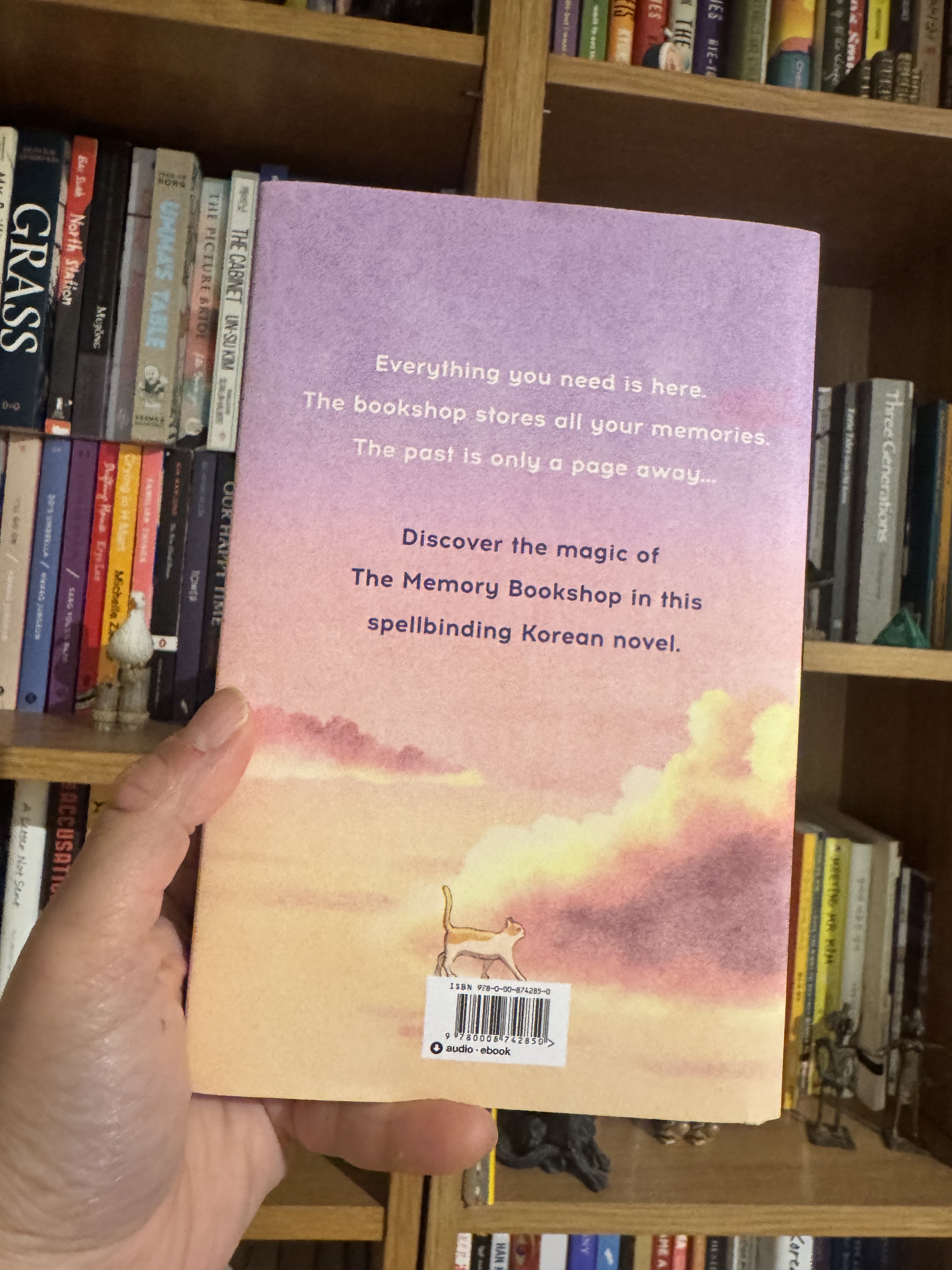
Through the voice of the bookshop’s guardian, it becomes clear that the place holds countless memories — all belonging to her. She is given the chance to revisit three instances from her past, in exchange for time taken from her future, with strict conditions: she can remain for only three hours and must not act out of character. At its core, this is what the novel is concerned with — not rewriting the past, but confronting it within the boundaries of who she is.
The notion of time travel has always fascinated me. Back to the Future first introduced me to the idea that changing one moment could alter everything. Here, though, the concept is simpler: go back, change one moment, and the future shifts. This is what we are initially led to believe as Jiwon-ssi is offered the chance to return to the past.
Of course, her first instinct is to save her mother, who died from cancer — to ensure an earlier diagnosis, to change the outcome, and therefore the future. However, as the story unfolds, she comes to realise that it is not as simple as changing a single moment. A single altered moment, among many others, does not always lead to a dramatic shift. Instead, she begins to understand that the real significance lies in how we experience the time we are given.
Having lost my father a few years ago, I still find it difficult — almost painful — to summon memories of him. They do not come gently; they arrive with the quiet realisation that he exists now only in moments I can revisit, but never return to. Because of this, I found myself reliving those moments with Jiwon as she returns to her past, able to be with her mother again, but experiencing those differently — now with a clarity that feels both tender and unbearable. It is a one I know I would wish for too, and one I am not sure I would be able to let go of.
The novel, which can be read in one sitting, focuses on three journeys she chooses to make, each undertaken with a guardian and the bookshop as her guide. It is not just the journeys themselves, but how she makes these decisions and what she chooses to do within that limited time.
Whilst reading, the concept of memory continually resurfaced. It made me question what a memory is — is it something I experienced myself, or something I was told and later came to understand as my own?
The novel reflects on how memories shift over time. Does a memory lose its impact the more we return to it, or does it simply change? Memory is more complex than that; it can soften, sharpen, or be reframed entirely, depending on where we stand in our lives.
A moment once held with certainty — like a friend being described as “for life” — can lose its meaning when that person is no longer part of your world. The memory remains, but what it represents is no longer the same.
I enjoyed some of the beautifully constructed sentences in the book, ranging from
“Waves undulated in the calm river of my mind,”
To descriptions of coffee being prepared:
“The woman smiled as she tipped the kettle, and the grounds frothed softly as they met the gentle stream of hot water. The rich aroma soon overpowered the scent of paper and wood, as a dark liquid passed through the light brown filter, dripping into a transparent beaker.”
Overall, this is a quiet, reflective book that stays with you, particularly if you are carrying the weight of grief. I can understand why some reviews suggest it may feel overwhelming if grief is still new, but if it is something that has been sitting with you for some time, this becomes a thoughtful and resonant read. It gently invites you to return to the moments that matter — not to dwell in sadness, but to continue living with purpose, in a way that honours those you have lost.
And perhaps that is the question the novel leaves behind — not whether we would change the past, but how we choose to live with it.
‘The Memory Bookshop’ by Song Yu-Jeong and translated by Shanna Tan, available to purchase from all good book shops and online. Published by Harper Collins
 Diya on Korea